Last Updated: November 4, 2026
Quick Summary
Buy bulk sanding supplies for cabinet shops by planning around usable surface, not box count: count discs consumed per door at each grit step, multiply by weekly door volume and four weeks, then add a 15 to 25 percent buffer. Round up to case quantity and set reorder points by grit and format so the line never stops.
- Never skip more than one grit step, or scratches show up after the first finish coat.
- A shop finishing 60 doors a week consumes about 600 discs a month before buffer.
- Match disc hole patterns to the pad and extraction shroud or dust packs and loads the abrasive.
- Store abrasives flat, dry, and away from heat to keep backing and bond intact.
- Recurring orders with posted reorder points keep restocking off the foreman’s plate.
Table of Contents
- Why Bulk Sanding Supplies Decide Your Shop’s Throughput
- Choosing the Best Sandpaper for Cabinets by Material and Finish
- Cabinet Sanding Discs, Sheets, Belts, and Sponges: Which Format Fits Which Step
- Grit Selection and Between-Coat Sanding for a Flawless Cabinet Finish
- Bulk Sandpaper for Woodworking: Quantity Planning and Cost Per Usable Surface
- What to Look For in a Woodworking Abrasives Supplier
- Dust Extraction, Storage, and Shop Safety for High-Volume Sanding
- Set Up a Recurring Bulk Sanding Order with IBEX Enterprises
- Frequently Asked Questions
Why Bulk Sanding Supplies Decide Your Shop’s Throughput
Bulk sanding supplies for cabinet shops are the consumables that keep a production line moving: discs, sheets, belts, blocks, and sponges bought in case quantities rather than one pack at a time.
Think about where your hours actually go. A cabinet door gets sanded before sealer, sanded again between coats, and touched up at the edges.
Below, we break down how to choose abrasives by material and finish, plan quantities so you never stop mid-run, and set up ordering that runs itself.
Choosing the Best Sandpaper for Cabinets by Material and Finish
The best sandpaper for cabinets depends on two things: what the surface is made of and what finish will sit on top. Coated abrasives, the family that includes most sandpaper and sanding discs, use a grit bonded to a backing. The backing and the mineral matter as much as the number printed on the disc.
For painted or lacquered cabinet parts, a stearated abrasive resists clogging, which matters when finish dust gums up the paper. For bare hardwood, aluminum oxide covers most work. For harder woods and heavier material removal, ceramic grain cuts faster and lasts longer, which changes your cost per door even though the disc costs more.
A common mistake is buying one grit for everything and pushing it harder to compensate. Match the abrasive to the step instead:
- Bare wood, leveling: coarse grit on a firm backing
- Bare wood, smoothing: medium grit on a random-orbit sander
- Sealer and primer: fine grit, stearated to resist loading
Cabinet Sanding Discs, Sheets, Belts, and Sponges: Which Format Fits Which Step
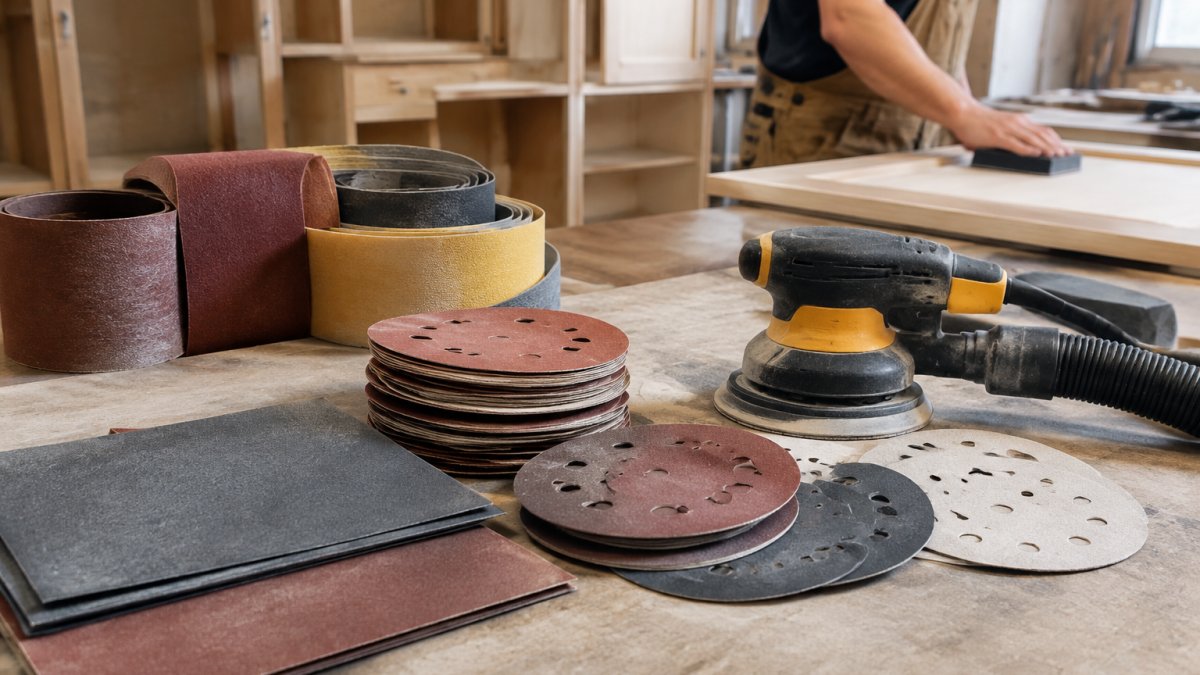
Each format solves a different problem, and a cabinet shop needs several on the shelf at once. Random-orbit sanders take hook-and-loop discs, and the hole pattern has to match the pad so dust extraction actually works.
For 150 mm hook-and-loop discs in 57-hole, 49-hole, and multi-hole patterns, you can browse the 150 mm hook and loop sanding discs we stock from Sia. If your edge sander or portable belt sander needs specific lengths, check the standard and custom sanding belt sizes available, including file belts and non-woven belts. For profile work on raised panels and moulded edges, see the sanding sponges and foam pads in hard, soft, and combination blocks from medium through ultrafine.
Watch out: buying discs with the wrong hole pattern is a common ordering error. The disc fits the pad, but dust packs under it and the abrasive loads within minutes.
Grit Selection and Between-Coat Sanding for a Flawless Cabinet Finish
Grit selection is a sequence, not a single choice. The rule that saves the most rework is simple: never skip more than one grit step.
A workable sequence for cabinet parts runs coarse for leveling, medium for smoothing, fine before sealer, and very fine between coats.
Two habits worth building:
- Mark the grit on the shelf edge, not just the box, so anyone can restock without guessing
- Keep a dedicated between-coat abrasive separate from bare-wood stock to avoid contamination
If a surface feels slick after sanding, the grit was too fine for that stage. Step back one grade.
Bulk Sandpaper for Woodworking: Quantity Planning and Cost Per Usable Surface

Bulk sandpaper for woodworking should be planned around usable surface, not box count. The number that matters is how many square feet or how many doors one disc actually finishes before it stops cutting.
Build a consumption baseline per door
Start with one representative door style and one panel size, then count abrasives consumed at each step. A common pattern for a paint-grade shaker door on a random-orbit sander looks like this:
- Bare-wood leveling (coarse): 1 disc per 2 to 3 doors, depending on how much glue and mill marks need removing
- Bare-wood smoothing (medium): 1 disc per 3 to 4 doors
- Pre-sealer fine pass: 1 disc per 4 to 5 doors
These are planning starting points, not guarantees. Hard maple and hickory dull abrasives faster than poplar or alder; MDF and particleboard load discs faster than solid wood; a conversion-varnish finish skins over abrasives sooner than a thin lacquer. Run the count for one week, then adjust the multipliers to your own material mix.
Convert the baseline into a monthly case order
Once you know discs per door, the rest is arithmetic:
- Count doors and panels in a typical week, including drawer fronts and end panels
- Multiply by discs-per-door for each grit step
- Multiply by four for a month of stock at current volume
- Add a buffer for rework, rush jobs, and sample doors, most shops find 15 to 25 percent covers normal variance
- Round up to the case quantity your supplier sells, and note the case size on the shelf label
A shop finishing 60 doors a week at roughly 2.5 discs per door across all grits is consuming about 600 discs a month before buffer. That is the number to order against, not the number of boxes that happen to be on promotion.
Track cost per usable surface, not sticker price
Divide the case cost by the number of doors it finishes to get a cost per door for that abrasive. Then add the labor side: changeover time, the minutes spent swapping loaded discs, and the rework caused when a dull disc burnishes instead of cuts.
Watch out: comparing discs by price per box without normalizing for disc diameter, hole pattern, and backing weight produces false savings, a thinner backing or a smaller disc can look cheaper per unit while covering less surface per dollar.
Set reorder points so the line never stops
Translate the monthly figure into a reorder point: the stock level at which a new order must go out to arrive before the shelf empties. If lead time is two weeks and weekly consumption is 150 discs, the reorder point sits at roughly 300 discs plus safety stock.
A paint-grade shaker door on a random-orbit sander gives a useful planning baseline for discs and sponges per step.
| Sanding step | Abrasive consumption |
|---|---|
| Bare-wood leveling (coarse) | 1 disc per 2 to 3 doors |
| Bare-wood smoothing (medium) | 1 disc per 3 to 4 doors |
| Pre-sealer fine pass | 1 disc per 4 to 5 doors |
| Between-coat very fine | 1 disc per 6 to 8 doors |
| Profile and edge sponges | 1 sponge per 8 to 12 doors |
What to Look For in a Woodworking Abrasives Supplier
A woodworking abrasives supplier should be judged on four things: whether the brands are professional grade, whether the specifications match your machines, whether stock and case sizes fit how your shop buys, and whether ordering runs without foreman involvement. Abrasive quality varies more than most buyers expect, and inconsistent grit between batches shows up as uneven finish.
Specification compatibility comes first
Most ordering errors are specification errors, not brand errors. Before you commit to a bulk line, confirm these details against your actual tools:
- Attachment system: hook-and-loop versus PSA versus clamp, a disc that fits the pad but uses the wrong backing peels or slips under load
- Hole pattern: 57-hole, 49-hole, multi-hole, or no-hole must match the pad and the extraction shroud, or airflow never reaches the dust
- Dimensions: disc diameter, sheet size, and belt length and width, including file belts and non-woven belts for edge sanders
A supplier who can confirm these against your machine list removes a common source of returns and downtime.
Case sizes, storage, and inventory management
Bulk buying only pays off when case quantities match your consumption and storage. Keeping abrasives dry and organized makes case quantities easier to manage, and the same storage discipline helps explain the benefits of bulk buying for other shop consumables.
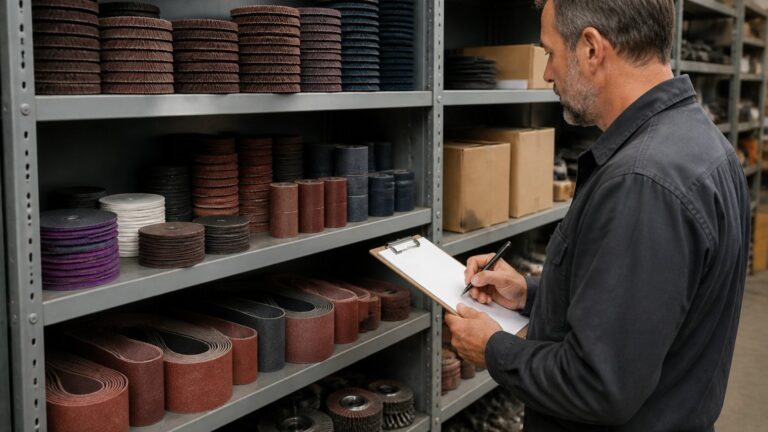
Set reorder points by grit and format, not by total inventory. A shop can be well stocked on coarse discs and still stop mid-run because the between-coat very fine grit ran out.
Ordering that fits how the shop already buys
Ask these questions before committing:
- Are the brands authorized lines, or generic relabels?
- Can the supplier hold your core grits in stock rather than drop-shipping them?
- Do they accept purchase orders the way your accounting department needs?
- Can they handle custom belt sizes and non-standard specs?
Every separate purchase order, every phone call to check stock, and every rush order takes foreman time away from production. A supplier that fits your buying process is worth more than a small per-unit saving.
Dust Extraction, Storage, and Shop Safety for High-Volume Sanding
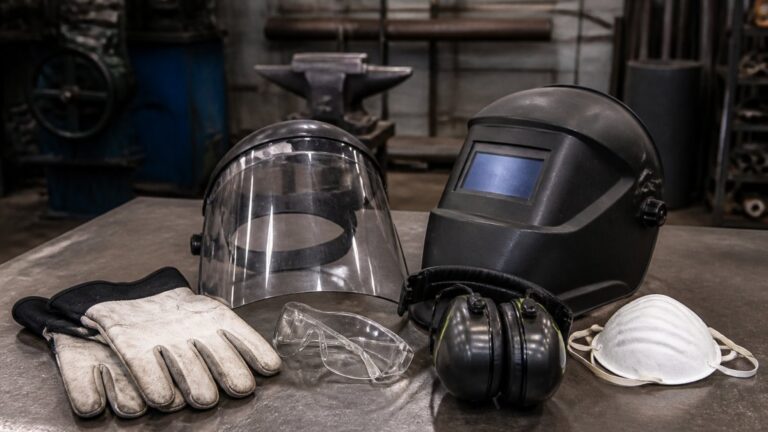
High-volume sanding produces fine dust that stays airborne for hours.
Match the extractor to the tool and the job.
For shops running random-orbit sanders all day, see the HEPA dust extractors we carry, including models with Bluetooth auto-start, plus bags, filters, and hoses.
Storage deserves the same attention. Abrasives stored flat, dry, and away from heat keep their backing and bond intact.
Set Up a Recurring Bulk Sanding Order with IBEX Enterprises
The final step is making supply predictable. A recurring order turns sandpaper from a weekly interruption into a background process. You set the grits, formats, and quantities once, and shipments arrive on a schedule your production calendar already knows.
IBEX Enterprises is built for this. If you want to understand the mechanics before committing, read our guide on how to automate recurring industrial supplies.
Pricing depends on quantity, formats, and delivery, so request a quote for current figures.
Frequently Asked Questions
What sanding supplies does a cabinet shop use most?
Random-orbit sanding discs in 125 mm and 150 mm diameters account for most day-to-day use, followed by sanding sheets for hand blocking, sanding sponges for profiles and edges, and belts for edge sanders or wide-belt machines. Cabinet doors and face frames also drive demand for fine-grit discs used in between-coat sanding. Stocking a small core range in the grits your workflow actually uses beats carrying a wide catalog of formats you rarely touch.
Which sandpaper grits are best for sanding cabinets?
A practical sequence is 80 grit for material removal and flattening, 120 grit for surface preparation, 150 to 180 grit before the first finish coat, and 220 to 320 grit for between-coat sanding and final smoothing. Painted surfaces usually need finer between-coat passes than clear coats. Keep the sequence consistent across operators so finish quality does not vary from door to door, and buy the middle grits in the largest case quantities since they get consumed fastest.
How can cabinet shops reduce sanding supply costs when buying in bulk?
Track how many discs, sheets, and belts you consume per week, then buy the high-turnover grits in full case quantities and keep the slow movers at smaller volumes. Cost per usable sanding surface matters more than the sticker price of a box, so compare abrasive durability and how long each disc keeps cutting. Recurring shipments also cut emergency orders and the premium pricing that comes with them. Request current bulk pricing from your supplier rather than estimating from list prices.
Can cabinet shops set up recurring orders for sanding supplies?
Yes. A recurring shipment schedule tied to your actual weekly consumption keeps critical grits in stock without tying up cash in overstock. Set the reorder point above your lead time, review usage monthly, and adjust quantities as production shifts. IBEX Enterprises supports automated recurring shipments and purchase order payments for purchasing managers buying bulk sanding supplies for cabinet shops.
Running a cabinet shop means your sanding line cannot afford a gap. Let us take the ordering work off your plate. Get started with IBEX Enterprises and keep every grit, disc, and belt in stock with automated recurring shipments, purchase order support, and fast reordering from your dashboard. Request a quote today.