

Dynabrade sanders in Calgary · pads & abrasive belts in stock · shipped across Canada
Dynabrade has built precision air-powered sanders, grinders, and finishing tools for metal and composite work since 1969. From a random orbital running 12,000 OPM on aircraft-grade aluminum to the abrasive belts that keep a weld bead clean, these are the tools shops rely on for tight finishes and clean weld cleanup. IBEX Enterprises stocks Dynabrade sanders, backing pads, and abrasive belts in Calgary, ships across Canada, and can source the wider Dynabrade tool range on request.
Not seeing the Dynabrade product you’re looking for? Submit an inquiry or call 403-250-3399.
Buy Dynabrade in Calgary
Order Dynabrade sanders, pads and belts online and choose Pickup at checkout to collect them from our NE Calgary warehouse at Unit 208, 2835 23 St NE, Monday to Friday, 8:30 am to 4:00 pm. Call 403-250-3399 before you come by so we can have your order ready, or we can ship it to you anywhere in Canada.
On this page
Why shops buy Dynabrade sanders with us
The tools and the consumables that feed them. We carry the Dynorbital Extreme (X-series) and Dynorbital-Spirit random orbitals, the Dynabug II DA sander, the backing pads they run on, and premium ceramic and non-woven abrasive belts. Need a Dynafile, Dynastraight, Dynisher, or another Dynabrade tool? We source it from the Dynabrade Buffalo warehouse on request.
Belts and consumables in stock. Air tools without consumables aren’t tools. We stock premium ceramic abrasive belts in 1/8″, 1/4″, and 1/2″ × 18″ plus DynaBrite non-woven nylon belts.
Calgary stock, shipped Canada-wide. Most Dynabrade resellers in Canada ship from Toronto or Mississauga. We ship from Calgary, so Western Canada gets it faster than ordering from out east.
Dynabrade sanders, pads and belts we stock
Random orbital sanders
- Dynorbital-Spirit 6″ — 3/16″ orbit, non-vacuum
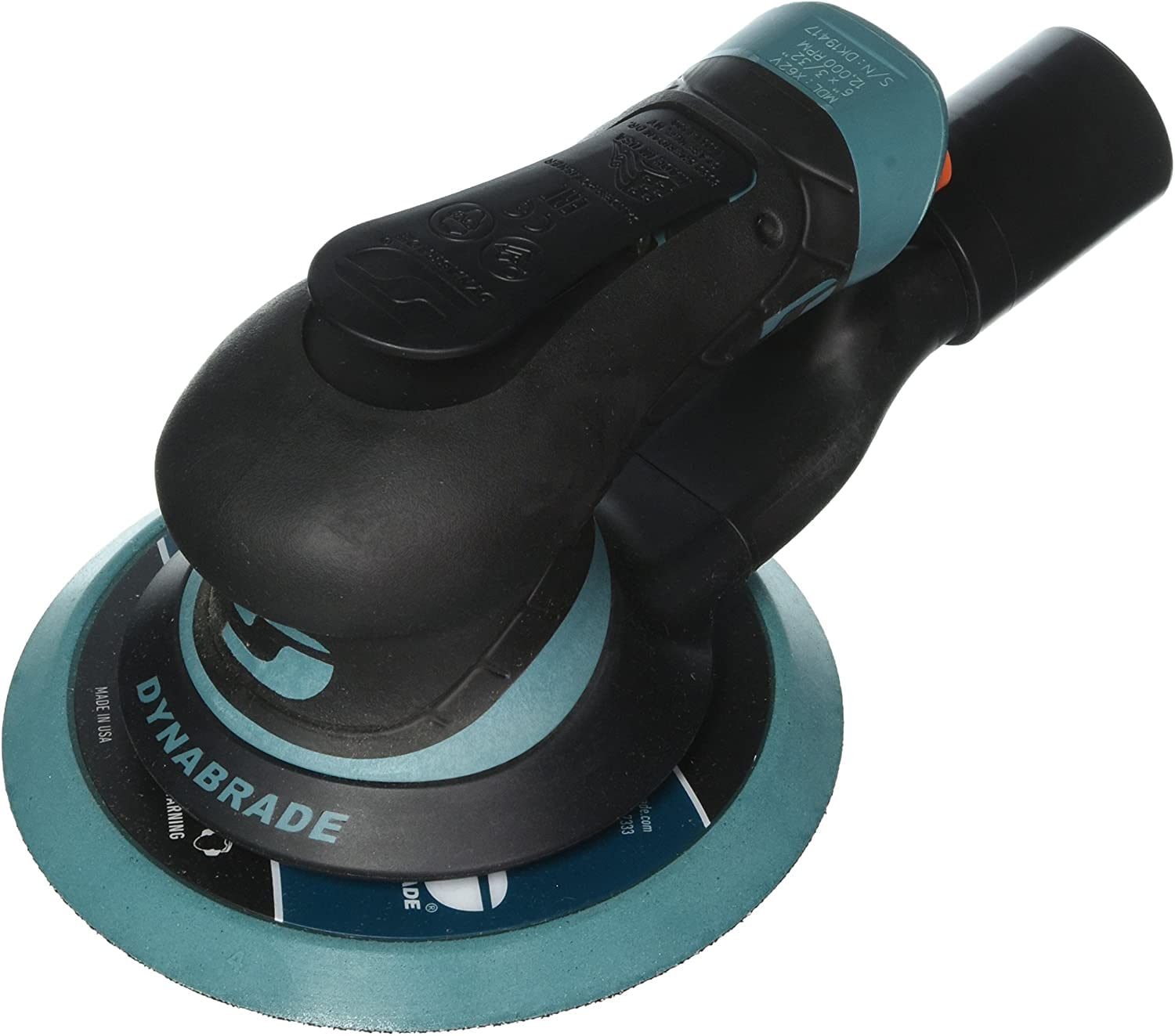
- Dynorbital Extreme (X-series) — high-output random orbitals: 5″ / 3/32″ orbit, hook-face (X52H), 6″ / 3/16″ orbit, vacuum (X61V), 6″ / 3/32″ orbit, non-vacuum (X62H), 6″ / 3/32″ orbit, vacuum, side handle (X62V)
DA sander
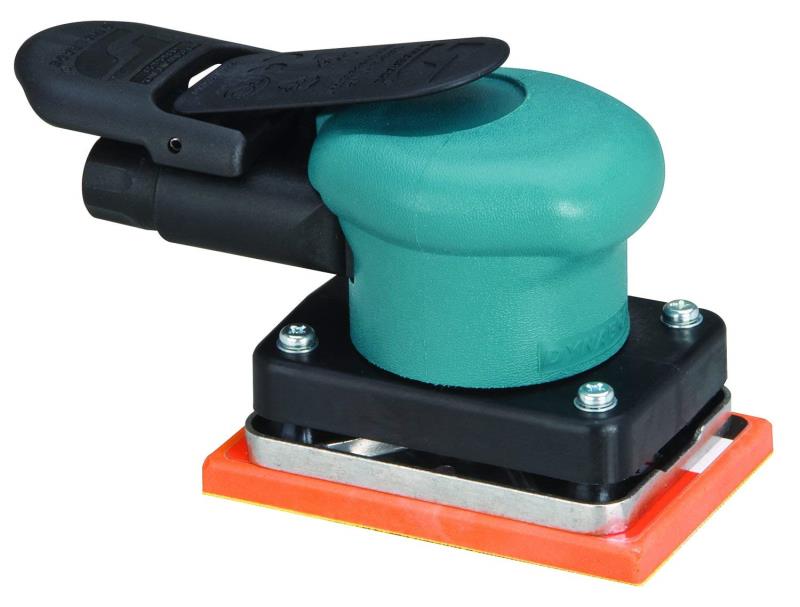
- Dynabug II — 3″ × 4-1/4″, non-vacuum, 3/32″ orbit, for ultra-fine finishes in tight areas
Backing pads (5″ & 6″ discs)
- 5″ hook-face — medium density or soft density
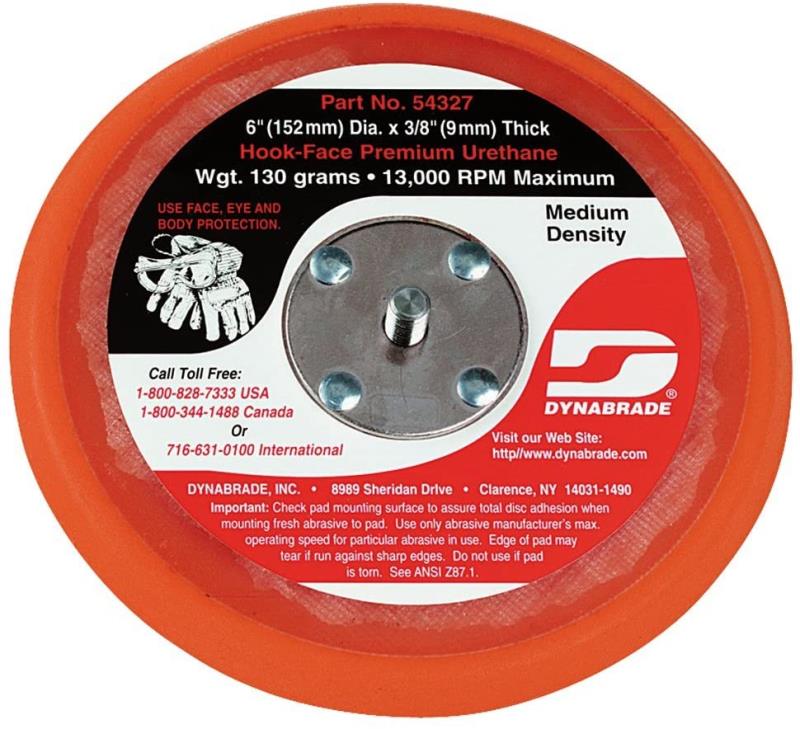
- 6″ hook-face — medium density or soft density
- PSA (stick-on) — 5″ non-vacuum, 6″ non-vacuum, and 5″ vacuum, vinyl-face
Abrasive discs
- 5″ DynaBrite scalloped hook-face disc — medium, box of 20
- 5″ scalloped surface-conditioning disc — fine grade, 10-pack
Abrasive belts
- Premium ceramic, 80 grit (20-pack) — 1/8″ × 18″, 1/4″ × 18″, and 1/2″ × 18″
- DynaBrite non-woven nylon belt — medium, 1/2″ × 18″
We can also source the broader Dynabrade tool range — Dynafile II, Dynastraight, Dynisher, Dynabuffer, contact arms and wheels, and rebuild kits — direct from Dynabrade. Send a parts list to info@ibexent.com and we’ll confirm current availability and lead time.
Dynabrade sanders compared
All the Dynabrade sanders we list are air-powered. The main choices are pad size, orbit size and whether the tool has vacuum. This table puts them side by side.

| Model | Pad | Orbit | Motor | Vacuum | Best for |
|---|---|---|---|---|---|
| Dynorbital-Spirit 59025 | 6″ | 3/16″ | 0.25 hp | No | Efficient sanding on wood, metal and composites |
| Dynorbital Extreme X52H | 5″ | 3/32″ | 0.3 hp | No | Lightweight ultra-fine finishing |
| Dynorbital Extreme X61V | 6″ | 3/16″ | 0.3 hp | Central vacuum | Industrial finishing with dust control |
| Dynorbital Extreme X62H | 6″ | 3/32″ | — | No | Ultra-fine finishes |
| Dynorbital Extreme X62V | 6″ | 3/32″ | — | Yes | Fine finishing with a side handle and safety throttle |
| Dynabug II 58500 | 3″ × 4-1/4″ | 3/32″ | — | No | Ultra-fine finishes in tight areas on wood, plastic and composites |
Choosing between Dynabrade sanders
Orbit size. A larger orbit moves the abrasive further on each pass, so it removes material faster. A smaller orbit leaves a finer scratch pattern. That is why the 3/16″ Dynabrade sanders (the Dynorbital-Spirit and X61V) suit general sanding and stock removal, while the 3/32″ models (X52H, X62H, X62V and Dynabug II) are the ones to reach for on final finishing passes.
Pad size. A 6-inch pad covers large flat panels faster. A 5-inch pad is lighter and easier to control on smaller parts and vertical surfaces. The Dynabug II has a rectangular 3″ × 4-1/4″ pad that gets into corners and tight areas a round pad cannot reach.
Vacuum or non-vacuum. Vacuum Dynabrade sanders pull dust through the pad and into a central vacuum or extractor. That keeps the abrasive cutting, the work surface visible and the air cleaner. Non-vacuum models are lighter and simpler, and suit work where you have other dust control or are sanding wet.
Handling. If the sander will run for long shifts, comfort matters. The X62V adds a side handle and a safety throttle for better control on bigger surfaces.
Backing pads for Dynabrade sanders
The backing pad is the part of a random orbital sander that wears out first, and the wrong pad can ruin a finish. Our Dynabrade pads are urethane, and the PSA pads thread onto 5/16″-24 tools.
- Hook-face, medium density: 5″ 54325 and 6″ 54327, with a short-nap hook face for low-vibration, swirl-free sanding. The everyday pad for flat work.
- Hook-face, soft density: 5″ 56195 and 6″ 56197, flexible pads for contoured surfaces.
- PSA, vinyl face: 5″ 56106 and 6″ 56107, heat-resistant pads for stick-on discs.
- PSA, vinyl face with vacuum holes: 5″ 56104, rated up to 12,000 RPM.
Match the pad diameter to the sander and the disc. On vacuum Dynabrade sanders, use a pad with vacuum holes so the extraction can reach the disc. Replace a hook-face pad when discs start flying off or the face is worn smooth, and pick soft density when you are sanding curves rather than flat panels.
Belts and surface-conditioning discs
Ceramic belts. The 1/8″ × 18″, 1/4″ × 18″ and 1/2″ × 18″ belts use a self-sharpening ceramic grain at 80 grit for aggressive grinding, shaping and deburring on tough metals. They come 20 to a box. The narrow widths get into slots, corners and weld joints that a disc cannot reach.
DynaBrite non-woven. The DynaBrite 78020 belt (1/2″ × 18″, medium) blends, deburrs and finishes without cutting as deep as a coated belt. For 5-inch sanders, the scalloped 92605 medium DynaBrite disc (box of 20) and the 92606 fine surface-conditioning disc (10 per pack) are hook-face and vacuum-ready for blending, deburring and refining metal and composite surfaces.
Sheets for the Dynabug II. For the Dynabug II we also stock Sia 1070.7334 sanding sheets, 100 per pack from 100 to 400 grit. See our Sia page for the full range.
Getting the most from air-powered Dynabrade sanders
Air tools are simple and tough, but they depend on the air you feed them. A few habits make a big difference to finish quality and tool life.
Clean, dry air at the right pressure. Water and debris in the line wear out the motor and can spit onto the work. Run a filter and regulator near the tool, drain the compressor tank regularly, and set the pressure and air volume to what the tool manual specifies. A hose that is too long or too narrow starves the tool, which shows up as a sander that slows down under load.
Follow the manual for lubrication. Each Dynabrade tool has its own lubrication instructions. Stick to them, and use the oil the manual calls for.
Start and stop on the work. Bring the pad flat onto the surface before the sander reaches full speed, and lift it off after you release the throttle. Starting a random orbital in mid-air and then touching down is the most common cause of gouges and swirl marks.
Let the sander do the work. Pressing hard slows the pad, heats the abrasive and leaves a rougher scratch. Light, even pressure with the pad flat gives a faster, cleaner result and longer disc life.
Keep the pad flat. Tilting a random orbital onto its edge concentrates the cut and wears the pad edge. If you need to sand an edge or a curve, switch to a soft-density pad instead.
A typical sequence for metal and composite work
Every job is different, but this is the order most fabrication and finishing shops follow with Dynabrade sanders and belts.
- Remove the weld or high spot. Use a ceramic belt in a width that fits the joint. The 80-grit ceramic belts cut hard metals quickly and keep sharpening as they wear.
- Blend the area. Move to a random orbital with a 3/16″ orbit and work through your disc grits without skipping more than one step.
- Refine the scratch pattern. Switch to a 3/32″ orbit sander for the finer grits so the final scratch is small and even.
- Condition the surface. Finish with a DynaBrite non-woven belt or disc to blend the area into the surrounding surface.
On composites, a vacuum sander keeps dust off the work and out of the air, and a soft pad helps on curved parts.
Dynabrade sanding terms explained
- Orbit: the diameter of the small circle the pad moves in. 3/16″ cuts faster; 3/32″ finishes finer.
- Random orbital: a sander whose pad both spins and orbits, so the scratch pattern does not repeat.
- Hook-face pad: a pad with a hook surface that takes hook-and-loop discs, which can be changed in seconds.
- PSA pad: a smooth vinyl-faced pad for pressure-sensitive adhesive (stick-on) discs.
- Pad density: medium density for flat surfaces, soft density for contours.
- Ceramic grain: a tough abrasive grain that keeps fracturing into new cutting edges, which is why it is called self-sharpening.
- Non-woven: a nylon web with abrasive throughout, used for blending, deburring and surface conditioning rather than heavy stock removal.
- Central vacuum: a sander that pulls dust through the pad and the tool body into a vacuum hose.
Dynabrade sanders for your kind of shop
Metal fabrication. For weld blending and surface prep on plate and tube, pair a 3/16″ orbit sander such as the Dynorbital-Spirit or X61V with ceramic belts for the joints. Finish with DynaBrite for a consistent surface.
Auto body and refinishing. The 3/32″ Dynabrade sanders, like the X62V and X52H, leave the fine scratch pattern you want before primer and paint. Vacuum models keep dust off fresh filler and out of the booth.
Aircraft maintenance and composites. Vacuum Dynabrade sanders help control dust from composite and painted surfaces, and soft pads follow curved panels. Ask us which pad and abrasive suit your material.
Woodworking and cabinet shops. The 6″ models cover panels quickly, and the Dynabug II handles corners, edges and tight areas on wood, plastic and composites.
Trades programs and schools. Air sanders are simple to maintain and stand up to heavy use, which makes them a good fit for training shops. We supply trades programs and public sector buyers, and can quote on multiple units.
Buying Dynabrade sanders from IBEX
Every Dynabrade listing on our site uses the Dynabrade part number, such as X62V or 54327, so you can match it to the tool or pad you already run. Our Calgary stock covers the Dynabrade sanders, pads, belts and discs listed above. For anything else in the Dynabrade range, including other sanders, Dynafile and Dynastraight tools, contact arms and rebuild kits, send us the part number and we will confirm current availability and lead time.
If you are not sure which of the Dynabrade sanders fits your work, call us at 403-250-3399. Tell us the material, the finish you need and whether you have a central vacuum, and we will narrow it down to one or two models and the pads and abrasives to go with them.
Caring for Dynabrade sanders between jobs
A few minutes of care at the end of a shift keeps Dynabrade sanders running smoothly for years.
- Blow the dust off the tool body and out of the pad area before you put it away.
- Store the sander on its side or hanging, never resting on the pad, so the pad face stays flat.
- Check hose fittings and couplers for leaks. A leaking fitting robs the tool of air and shows up as lost speed.
- Pull worn discs off at the end of the day so the hook face is not crushed overnight.
- Keep a spare pad for every sander, so one worn pad does not stop the job.
Common Dynabrade buyer questions
Where does IBEX source its Dynabrade tools?
We stock Dynabrade tools and parts sourced through the Dynabrade distribution network, and all tools carry the full Dynabrade manufacturer warranty (typically one year on tools, longer on some models). Warranty claims go through IBEX — we handle the Buffalo-warehouse return on your behalf.
Can you source a Dynabrade SKU you don’t have listed?
Almost always. If the SKU isn’t on our shelf, we can typically have it landed in Calgary — call and we’ll confirm current availability and lead time. Email a parts list to info@ibexent.com or call 403-250-3399.
What’s the difference between the Dynorbital-Spirit and the Dynorbital Extreme?
The Dynorbital-Spirit is the everyday random orbital for finishing and prep. The Dynorbital Extreme (X-series) is the higher-output line built for heavier stock removal — weld blending, mill scale, and surface prep on raw plate — in vacuum and non-vacuum, 5″ and 6″, with 3/32″ and 3/16″ orbits.
Can you get rebuild kits and parts?
Yes — we source Dynabrade parts and rebuild kits direct from Dynabrade. Call with your tool model and we’ll confirm availability and lead time.
Do you sell to shops, schools, government, and aerospace contractors?
Yes. We sell to metalwork shops, autobody shops, aircraft maintenance operations, trades programs, and provincial and federal buyers.
What thread do the Dynabrade PSA pads use?
The 5″ and 6″ PSA pads we list fit 5/16″-24 threaded tools. Check your sander’s spindle before ordering.
Which pad should I use on a vacuum sander?
Use a pad with vacuum holes so the extraction reaches the disc. We list the 5″ 56104 vacuum PSA pad. For other vacuum pad sizes, call us with the sander model and we will confirm the right part.
Is the Dynabug II only for auto body work?
No. The Dynabug II is listed for ultra-fine finishes in tight areas on wood, plastic and composites, and its rectangular pad reaches corners a round pad cannot.
Ceramic belt or DynaBrite belt?
Use the ceramic belt to remove metal, shape parts and clean up welds. Use the DynaBrite non-woven belt afterwards to blend and finish the surface.
How often should I replace a backing pad?
Replace it when discs stop holding, the hook face is worn smooth, or the pad edge is torn or uneven. A worn pad causes vibration and an uneven finish, so it is worth keeping a spare for each sander.
Can I use Sia discs on Dynabrade pads?
Yes, as long as the disc and pad match. A hook-and-loop disc fits a hook-face pad of the same diameter, and a PSA disc goes on a vinyl-face PSA pad. On vacuum sanders, choose a disc with a hole pattern that lines up with the pad. See our Sia page for 5″ and 6″ discs.
What is the difference between the X62H and the X62V?
Both are 6″ Dynorbital Extreme sanders with a 3/32″ orbit for fine finishing. The X62H is non-vacuum. The X62V adds vacuum, an ergonomic side handle and a safety throttle.
Are Dynabrade sanders in stock in Calgary?
The Dynabrade sanders, pads, belts and discs listed on this page ship from our Calgary warehouse at 2835 23 St NE, Unit 208, and you can choose pickup at checkout. Stock levels change, so the product page shows what is available right now. If you need several units for a crew or a training shop, call us first and we will confirm quantities and timing before you order.
Questions or larger quantities?
Buying tools and consumables on a recurring basis? Submit an inquiry or call 403-250-3399 to talk to a buyer. Also see Sia discs → and Festool tools →