Last Updated: November 7, 2026
Quick Summary
Reliable Canadian suppliers for Festool products are not hard to find if you verify four things: written authorization, stock depth, parts support, and delivery you can plan around. Confirm authorization in writing, cross-check Festool’s official dealer locator, and test with a small order before committing.
- Ask for written confirmation of authorization and cross-check the supplier on Festool’s official dealer locator.
- Confirm which service partner handles repairs and where that partner is located.
- Match the exact part number, compatible model, and hole count before ordering replacement parts.
- Keep the invoice, serial number, and purchase date on file to make warranty claims succeed.
- Compare suppliers on shipping terms, return window, stock confirmation, and lead time to your province.
Table of Contents
- What Makes a Festool Supplier Reliable?
- How to Verify Festool Authorized Dealers
- Where to Buy Festool Tools Online in Canada
- Sourcing Festool Replacement Parts from a Canadian Supplier
- Festool Warranty and Service: What Canadian Buyers Should Expect
- Shipping, Returns, and Total Purchase Cost
- Request a Quote from a Reliable Festool Supplier
- Frequently Asked Questions
What Makes a Festool Supplier Reliable?
Finding reliable Canadian suppliers for Festool products comes down to four things: authorization, stock depth, parts support, and delivery you can plan around, and the best Festool products suppliers prove all four before you order. A supplier is reliable when it can prove it is an authorized dealer, keeps consumables and spare parts on the shelf, and ships on a schedule your shop can depend on.
Festool is a system of tools, and system tools only pay off when abrasives, sanding pads, and extractor parts arrive on time. At IBEX Enterprises, we work with purchasing managers who care less about a flashy storefront and more about whether the next order lands before the current stock runs out.
That is the real test. A supplier that stocks the tools but not the consumables leaves your sanders idle. Below, we break down how to separate a genuine dealer from a drop-shipper, and what to ask before you place a first order.
How to Verify Festool Authorized Dealers
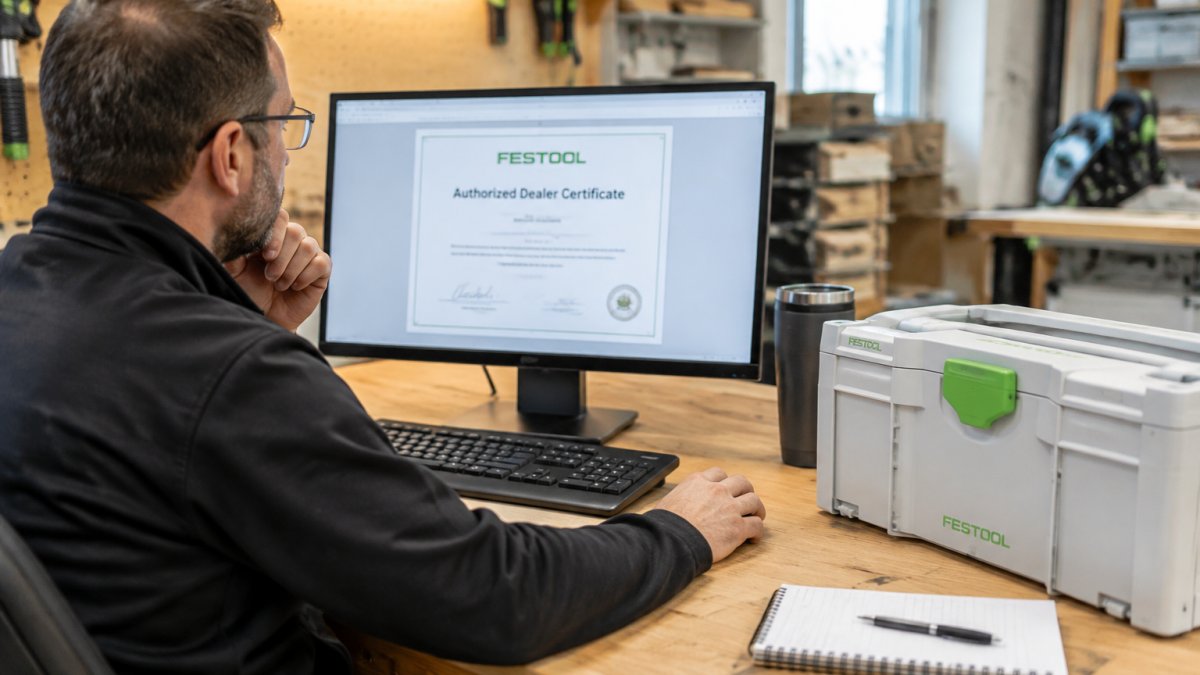
The fastest way to verify a Festool authorized dealer is to ask for written confirmation of authorization and cross-check the dealer against Festool’s own official dealer locator. A genuine dealer will answer without hesitation and can explain what authorization covers, including warranty registration and service routing.
Watch out: a supplier that sells Festool with no authorization paperwork may not be an approved channel. That can matter at claim time, when a warranty repair may be refused if the tool was not bought through an approved channel.
Most buyers treat verification as a single phone call. A more reliable approach is a short checklist you run before the first order and repeat whenever you add a new supplier.
Step 1: Confirm authorization in writing. Ask for an email or letter that states the supplier is an authorized Festool dealer. Verbal assurance is not enough, because authorization is what ties the purchase to warranty registration and to the correct service partner. If the supplier cannot produce written confirmation, treat that as a stop signal.
Step 2: Cross-check the official dealer locator. Festool maintains a dealer locator on its own website. Search the supplier’s business name and location. A legitimate dealer will appear; a drop-shipper or gray-market reseller usually will not. If the supplier is listed under a different legal name, ask them to explain the relationship in writing.
Step 3: Ask how warranty registration is handled. An authorized dealer should be able to describe the registration process in plain terms: whether the purchase is registered to the end customer, what information is collected (serial number, invoice date, customer details), and how a claim is initiated.
Step 4: Identify the service partner. Ask which service partner handles repairs for their customers and where that partner is located. Repair routing matters because tools may need to travel to a service center. A dealer who can name the service partner and describe the turnaround expectation is demonstrating real after-sales infrastructure.
Step 5: Test with a small order. Before committing a large purchase order, place a small order for a consumable or accessory. Watch how the supplier handles stock confirmation, shipping notification, and the invoice.
Ask three direct questions:
- Can you confirm in writing that you are an authorized Festool dealer?
- Do you register purchases so warranty claims route correctly?
- Which service partner handles repairs for your customers?
A supplier that stumbles on any of these is telling you something. Authorization is not paperwork for its own sake; it is what makes the warranty real.
Where to Buy Festool Tools Online in Canada
You can buy Festool tools online in Canada from authorized dealers who ship nationwide and keep core tools in stock. The practical difference between suppliers shows up in availability, not marketing: can they confirm stock today, and can they ship to your province without a special order delay?
When you browse, look at what the supplier actually lists. A serious dealer carries the full power tool range, from track saws and routers to DOMINO joiners and dust extractors, plus the accessories that make each tool work. If the catalog stops at a handful of tools, you will end up splitting orders across three suppliers.
You can browse the power tool range to see current availability, or go straight to the Festool electric sanders if sanding is your priority. Buying from one supplier that carries both tools and consumables cuts the number of purchase orders your team has to raise.
Sourcing Festool Replacement Parts from a Canadian Supplier
Sourcing Festool replacement parts from a Canadian supplier means matching the exact part number before you order. Festool uses specific part numbers for every pad, plate, and consumable, and a supplier who cannot confirm the number against your tool model is guessing with your money.
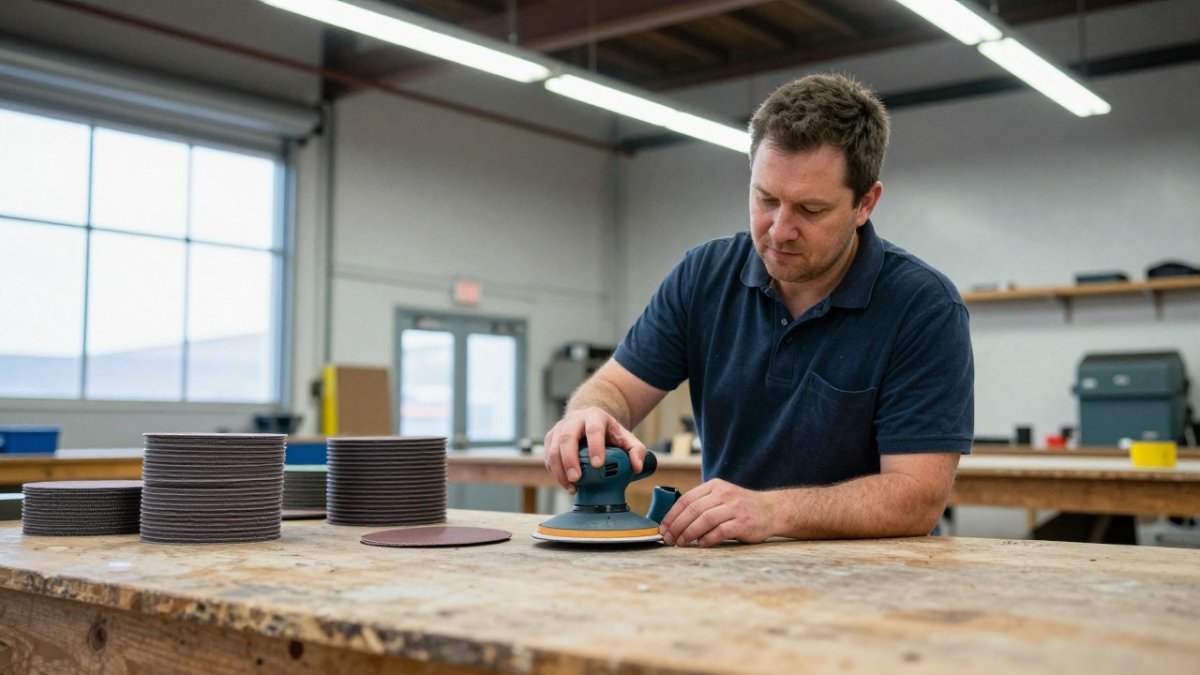
Take a sanding pad. Replacement pads must match your sander’s model and extraction layout, so order the wrong hole pattern and dust management can suffer.
A common mistake is ordering parts from the tool description rather than the part number. Always confirm the number, the compatible model, and the hole count. If a supplier lists a pad without the part number, ask for it in writing. For a closer look at ordering consumables, our guide to buying Festool abrasive discs online covers what to check before checkout. You can also see a live example in this replacement sanding pad listing.
Festool Warranty and Service: What Canadian Buyers Should Expect
Festool warranty and service in Canada depends on buying through an authorized channel. Tools bought from unauthorized sellers can lose warranty coverage, and repairs may route through a service partner that never sees your purchase record. That is the hidden cost of a bargain price.
The practical question for a Canadian shop is not whether a warranty exists but whether a claim will actually be honored and how long the tool will be out of service. A smooth claim and a frustrating one often come down to three things: where the tool was bought, whether the purchase was registered, and whether the service route is domestic or cross-border.
Warranty eligibility. Festool’s warranty terms apply to tools purchased through authorized channels. A tool bought from an unauthorized seller may still function, but the warranty claim can be refused because the purchase cannot be tied to an approved dealer. Before you buy, confirm that the supplier is authorized and that the invoice will show the dealer’s business name, the purchase date, and the tool’s serial number.
Repair routing. In Canada, repairs typically go through a service partner rather than back to the dealer. Ask the supplier which service partner handles their customers and where it is located. A domestic service route can avoid the paperwork and delay that come with cross-border shipping. If the supplier cannot name the service partner, assume the routing is ad hoc and plan for longer turnaround.
Service turnaround. Turnaround depends on the repair, parts availability, and shipping distance to the service partner. A common pattern is that consumable-level fixes (pads, cords, switches) move faster than motor or electronics repairs that require parts from overseas. Ask the supplier what turnaround they typically see for the repair type you are most likely to need, and build that expectation into your job scheduling.
Documentation that makes claims succeed. Keep the invoice, the serial number, and the purchase date on file. A simple log of serial numbers and purchase dates saves hours when a tool needs service, and it lets you prove the purchase channel if a claim is questioned.
What to confirm before you commit. Ask two things: that the supplier registers your purchase, and that they can tell you where a repair goes. A dealer who handles this as routine is worth keeping. One who deflects the question is not.
Keep your invoices. Warranty claims move faster when the purchase record is clean and the serial number is on file. For a shop running multiple sanders, a simple log of serial numbers and purchase dates saves hours when a tool needs service.
Shipping, Returns, and Total Purchase Cost
Total purchase cost is where cheap suppliers lose. A lower sticker price means little if shipping adds days, returns require a phone argument, or a backordered consumable stops a job. Compare suppliers on landed cost and delivery reliability, not the headline number alone.
Build your comparison around four columns: shipping terms, return window, stock confirmation, and lead time to your province. Ask each supplier to confirm these in writing before the first order. Pricing depends on quantity, order frequency, and delivery terms, so request a quote from IBEX Enterprises for current prices.
| What to compare | What to ask | Why it matters |
|---|---|---|
| Shipping terms | Free shipping threshold and lead time | Predictable delivery keeps jobs on schedule |
| Returns | Return window and restocking terms | Wrong part numbers happen; returns should be simple |
| Stock confirmation | Can they confirm stock before you order? | Avoids backorder surprises on critical items |
| Parts support | Do they stock consumables and spare parts? | Keeps sanders and extractors running |
For a deeper look at ordering professional sanding supplies online, read our guide on buying sanding supplies in Canada, which covers shipping and ordering considerations in more detail.
Request a Quote from a Reliable Festool Supplier
The reliable supplier question has a practical answer: pick a dealer who proves authorization, stocks the parts, and ships on terms you can plan around. Everything else is marketing.
IBEX Enterprises is a B2B supplier built for purchasing professionals, with recurring shipment subscriptions, purchase order payment support, and rapid reordering from a personalized dashboard. We are an authorized Canadian supplier for brands including Festool, Sia, and Dynabrade, and we support shops nationwide. If you are tired of chasing stock confirmations across several suppliers, request a quote from IBEX Enterprises to discuss availability and delivery terms for your order.
Stop splitting orders across suppliers that cannot confirm stock. Get started with IBEX Enterprises and keep your sanders, saws, and extractors running with one dependable source for tools, parts, and abrasives.
Frequently Asked Questions
Where can I buy Festool products online in Canada?
Buy from a supplier that confirms authorized dealer status and shows live stock, not just a catalog page. Ask about delivery windows and how warranty claims are handled. A B2B supplier that supports purchase orders and recurring shipments can suit shops that want one account and one invoice trail.
How can I tell whether a Festool seller is reliable?
Check three things before your first order. First, ask for written confirmation of authorized dealer status. Second, ask how Festool warranty and service claims are handled and who submits them. Third, test the response time with a parts question: give a specific part number and see whether they can confirm availability. A supplier that answers all three clearly, in writing, is worth an account. One that deflects on authorization or warranty is a risk to your tool investment.
Can I buy Festool replacement parts from a Canadian supplier?
Yes, and it matters for uptime. Consumables like sanding pads and abrasives wear out long before the tool does, so a supplier that stocks replacement parts and consumables alongside tools keeps your shop running. When you inquire, give the exact part number from your tool’s manual or label. Ask the supplier to confirm the part, the price, and the lead time rather than guessing at a substitute.
Do Festool suppliers offer shipping and warranty support?
Supplier shipping terms vary, including free shipping thresholds, delivery windows, and whether returns are accepted on opened tools. Warranty support is the bigger differentiator. Ask whether the supplier registers your purchase, how service claims are handled, and what documentation they provide. Get those answers before you order, not after a tool fails mid-project.