Table of Contents
- Why Buying Professional Sanding Supplies Online Beats the Local Runaround
- Sanding Belts and Sheets: Matching the Abrasive to the Job
- Woodworking Sanding Discs: Grit Sequences That Save Finishing Time
- Sandpaper for Cabinet Shops: What High-Volume Buyers Should Stock
- What Separates Professional-Grade Abrasives From Hardware Store Packs
- Ordering Sanding Supplies With Purchase Order: How B2B Procurement Works
- Shipping, Delivery Coverage and Returns When You Buy Sanding Supplies Online
- Conclusion
- Frequently Asked Questions
Last Updated: October 21, 2026
Why Buying Professional Sanding Supplies Online Beats the Local Runaround
Most shops don’t lose money on abrasives. They lose it on the drive to restock them. A foreman who leaves at 2 p.m. to chase a box of 120-grit discs burns half a shift, and the cabinet shop down the road closes at five. That math is why so many operations now buy professional sanding supplies online rather than keeping a local counter on speed dial. At IBEX Enterprises, we build for exactly that shift: purchasing managers who want a stocked shelf without the windshield time.
Online ordering also fixes the stock problem. Local shelves carry what sells, not what your job needs. A wide belt sander running wide belts rarely finds them in a strip-mall aisle. Ordering online opens the full range of grits, backings and sizes, and it lets you set a repeat order so the shelf refills itself. Below, we break down belts, sheets, discs and blocks, then cover how procurement, shipping and returns actually work when you buy sanding supplies online.
Sanding Belts and Sheets: Matching the Abrasive to the Job
Abrasive choice starts with the material, not the grit number. Softwoods clog paper fast, so a stearated coating earns its keep. Hardwoods and finishes want a sharper, more durable grain. Metal needs a different backing entirely.
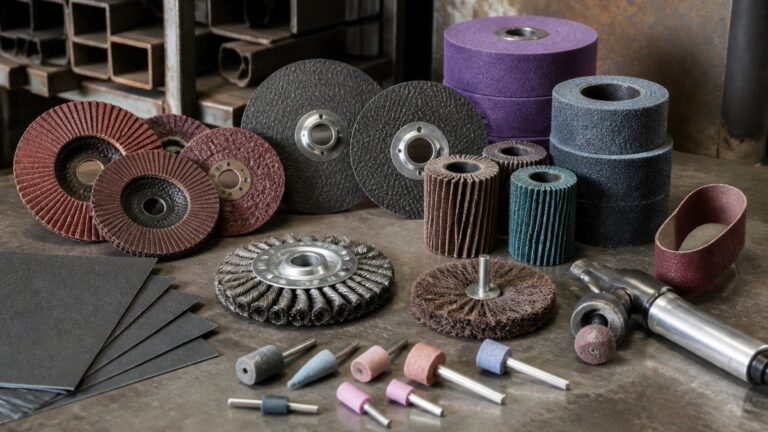
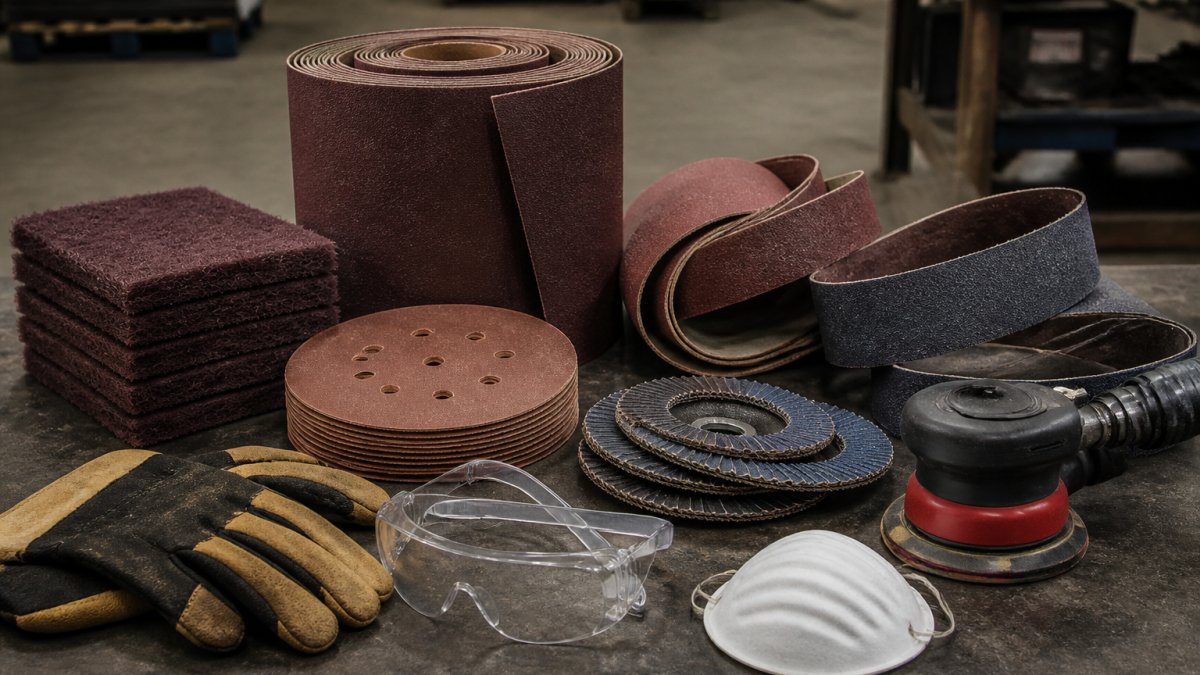
Sanding belts and sheets are the workhorses of any shop, and the format matters as much as the mineral:
- Narrow belts suit portable belt sanders and edge work
- Wide sanding belts fit stationary machines and flatten large panels
- Sanding sheets cut by hand or clip onto a block for detail work
- Sanding discs handle random orbital and angle grinders
A common mistake is buying one grit and expecting it to do three jobs. In practice, a proper sequence (rough to fine) cuts total time and saves abrasive. Match the backing to the tool, too: cloth-backed belts survive heat that paper won’t.
Woodworking Sanding Discs: Grit Sequences That Save Finishing Time
The fastest way to cut finishing time is to stop skipping grits. Jumping from 80 to 220 leaves scratches that show up the moment stain hits the surface. A disciplined sequence removes each previous scratch before moving on.
For most woodworking sanding discs, a workable sequence runs:
| Stage | Grit | Purpose |
|---|---|---|
| Flatten | 80 | Remove mill marks and level |
| Refine | 120 | Erase 80-grit scratches |
| Smooth | 180 | Prep for finish |
| Finish | 220 | Final surface before coating |
Mark each disc with its grit on the backing pad with a paint pen. In a busy shop, unmarked discs get mixed up and a stray coarse disc ruins a finished panel.
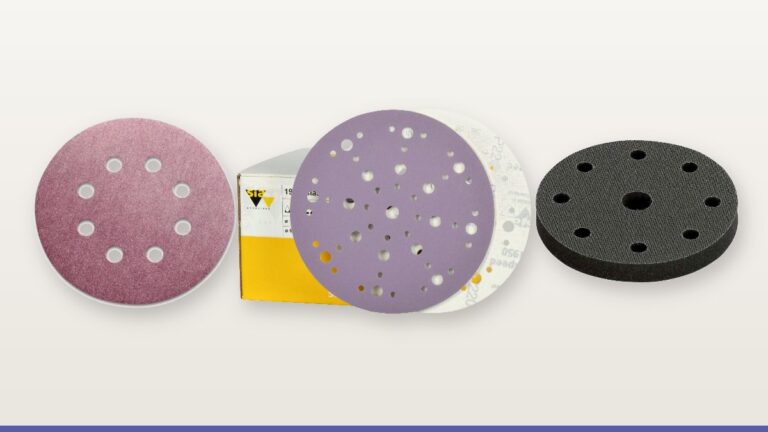
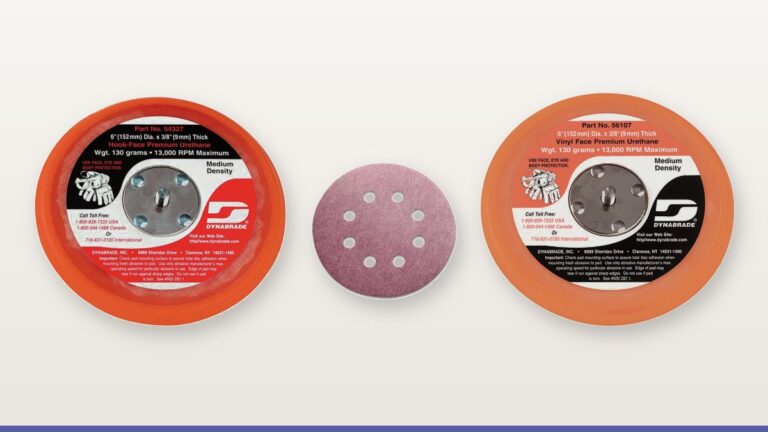
Hook-and-loop backing pads make swaps quick, and a clean pad holds grip longer. Replace worn pads before they start shedding discs mid-pass.
Sandpaper for Cabinet Shops: What High-Volume Buyers Should Stock
High-volume shops should stock by consumption, not by catalog. Track which grits disappear fastest and keep a buffer of those, plus a smaller reserve of the long-tail sizes.
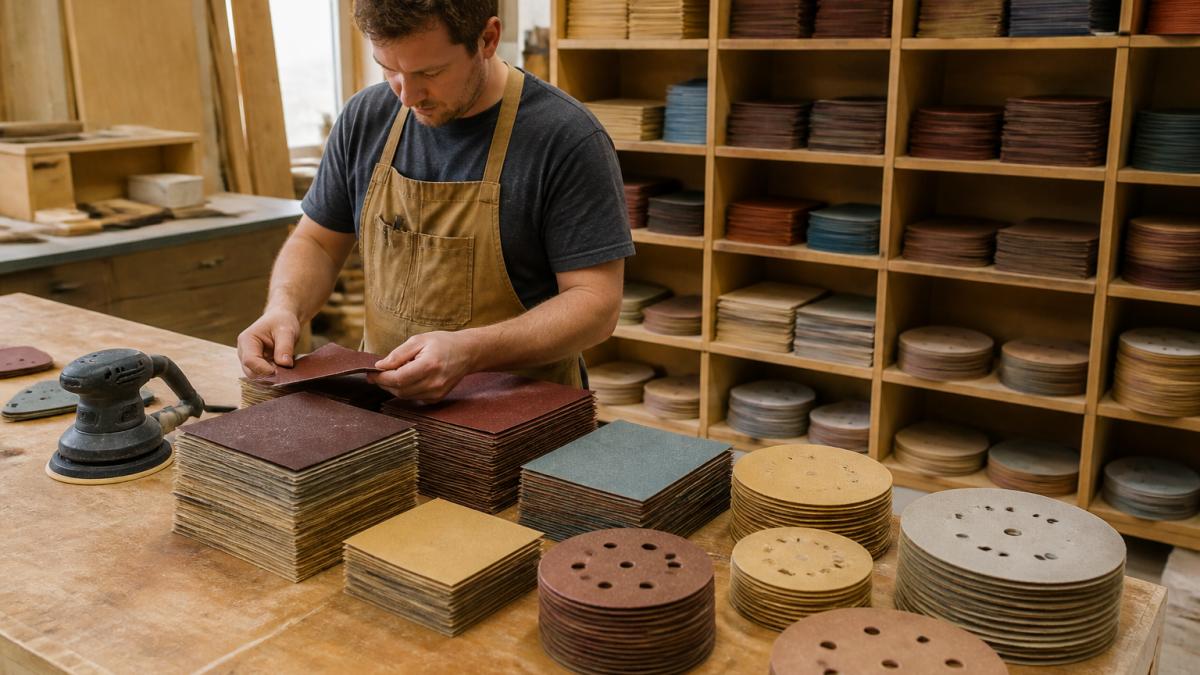
Sandpaper for cabinet shops is a recurring cost, so treat it like one. The practical stocking list:
- Bulk packs of the three or four grits you burn through weekly
- A reserve of fine grits for finish work
- Sheets and discs in the sizes your tools actually take
- Backing pads and blocks so a worn pad never stalls a job
Buying in bulk lowers cost per use, but only for grits you’ll actually finish. Overstocking a specialty grit ties up cash and shelf space. A recurring shipment on your core grits, topped up with occasional special orders, keeps inventory lean without risking a stockout.
What Separates Professional-Grade Abrasives From Hardware Store Packs
Professional-grade abrasives last longer and cut cooler, and that difference shows up in cost per use, not sticker price. Hardware store packs often use lighter backing and less consistent grain, so they dull faster and load up sooner. But the gap between professional and consumer abrasives is not one thing; it is a set of material and task-specific choices that determine whether a disc survives a full panel or fails halfway through.
Start with the abrasive mineral. Aluminum oxide is the general-purpose workhorse for wood and metal, offering a balance of toughness and cost. Zirconia alumina cuts faster and lasts longer on heavy stock removal, which is why it is common in belt sanding and coarse grits. Ceramic grain is the premium choice for hardwoods and heat-sensitive work; it fractures continuously to expose fresh cutting edges, so it runs cooler and lasts longer under pressure. For finishing coats and paint, silicon carbide delivers a sharp, fine scratch pattern that suits between-coat sanding.
Backing material matters as much as the mineral. Cloth-backed belts survive heat and tension that paper cannot, making them the default for stationary machines and portable belt sanders. Heavy paper or film backings suit random orbital discs, where flatness and consistent thickness matter more than flexibility. Hook-and-loop backing pads should be matched to the disc weight; a worn pad sheds discs mid-pass and ruins the surface.
Coating and bond determine how the abrasive behaves on clog-prone materials. Stearated coatings resist loading when sanding softwoods, paints, and finishes. Open-coat abrasives leave more space between grain, which helps on soft or gummy materials. Resin bonds hold up better under sustained load than glue bonds, which is why they dominate professional lines.
What to check before you commit:
- Mineral type: aluminum oxide for general use, zirconia for heavy stock removal, ceramic for hardwoods and heat-sensitive work, silicon carbide for fine finishing
- Backing material: cloth for belts, heavy paper or film for discs, and a pad that matches the disc weight
- Coating: stearated or open-coat options for clog-prone materials
- Bond: resin bonds for sustained load
The cheapest pack is rarely the cheapest abrasive. A disc that dulls in half the time doubles your consumable spend and adds labor hours to every job. Compare cost per use, not cost per pack.
Authorized suppliers carry trusted brands with consistent specs, so a reorder performs like the last one. That consistency is what high-volume shops pay for, and it is the difference between a supplier that sells abrasives and one that keeps your line running.
Ordering Sanding Supplies With Purchase Order: How B2B Procurement Works
Ordering sanding supplies with a purchase order should be routine, not a workaround. A B2B-first platform accepts PO payment, keeps order history on a dashboard, and lets you reorder in a few clicks.
Procurement friction is the hidden cost here. If every order means a phone call, a quote request and a manual invoice, your team loses hours a month. The fix is a supplier set up for purchasing professionals:
- PO payment support that matches your accounting process
- A personalized dashboard for rapid reordering
- Recurring shipment subscriptions for steady-use items
- Special orders for non-standard specs
The best procurement setup removes the order from your to-do list. Recurring shipments on core items mean the shelf refills without anyone placing a call.
Shipping, Delivery Coverage and Returns When You Buy Sanding Supplies Online
Delivery coverage and return terms matter as much as the abrasive itself. Buyers face a specific set of logistics questions that generic advice ignores: Does the supplier ship to remote or rural postal codes without surcharges? Are belts and discs shipped flat or rolled to prevent creasing? What happens when a special-order grit arrives after the job has moved on?
Start with coverage. A supplier that ships nationwide should state clearly whether remote and rural postal codes carry surcharges or extended timelines. For shops in major centers, next-day or two-day delivery on core grits is common; for outlying areas, expect three to five business days. Ask whether the supplier ships from a warehouse or fulfills from across the border, because cross-border fulfillment adds customs clearance time and can complicate returns.
Shipping cost scales with order size, so bundling a recurring shipment often beats frequent small orders. A practical pattern is to set a monthly recurring order on your top three grits and top up with special orders only when a job demands it. That keeps freight per unit low and avoids the small-order surcharge many suppliers apply below a minimum order value.
Returns are where online buying can go wrong. Confirm three things before you commit to a bulk order:
- Return window: how many days you have to return unopened abrasives, and whether special orders are excluded
- Condition requirements: whether opened packs or partial boxes are accepted, and who pays return freight
- Defect handling: what the process is for a belt that breaks early or a disc that sheds grain, and whether the supplier replaces or credits
A supplier that cannot guarantee stock on critical items creates downtime you cannot afford. Ask about inventory depth on your core grits and how special orders are sourced. If a backorder is likely, a supplier should tell you before the order ships, not after. The best online suppliers publish their shipping and return terms plainly, so you can compare them side by side before you place a bulk order.
Conclusion
The real challenge in sourcing abrasives isn’t finding a supplier; it’s finding one that keeps your shelf stocked without adding admin work. IBEX Enterprises is built for that: a B2B-first platform with recurring shipment subscriptions, purchase order payment support, and rapid reordering from a personalized dashboard, backed by an authorized selection of trusted brands like Sia, Festool and Dynabrade. Request a quote from IBEX Enterprises and keep your shop stocked and running.
Frequently Asked Questions
Where can professionals buy sanding supplies online?
Specialist B2B suppliers that stock professional-grade abrasives and ship nationwide are the usual choice for shops that need consistent supply. Look for a supplier that lists grit ranges clearly, shows pack sizes and stock status, accepts purchase orders, and offers recurring shipments. IBEX Enterprises supplies professional sanding supplies online across the country, with brands such as Sia, Festool and Dynabrade, and lets buyers request a quote for bulk or custom orders.
Can businesses order sanding supplies with a purchase order?
Yes. Many B2B abrasive suppliers accept purchase order payment so your accounting department keeps its existing approval workflow. Before switching, confirm three things: that the supplier accepts POs without a card on file, that invoices match your PO numbers, and that recurring shipment subscriptions can be billed against the same PO. IBEX Enterprises supports purchase order payments alongside automated recurring shipments, which removes most of the admin work from reordering abrasives.
What is the difference between sanding discs, belts and sheets?
Sanding discs mount on random orbital or angle grinders and suit flat panels, blending and stock removal. Sanding belts fit belt sanders and stationary machines, and wide sanding belts handle large panel flattening. Sheets are cut for hand sanding blocks, detail work and drywall. Cabinet shops typically stock all three: discs for panel work, belts for edge and face sanding, and sheets for touch-up. Buying them from one supplier keeps grit sequences consistent across the shop.
How do I choose the right sandpaper grit for a woodworking project?
Start coarse enough to remove the marks from the previous operation, then step up in controlled increments. A common sequence for bare wood is 80, 120, 150 and 180 grit before finishing; skip more than one grit and you spend longer removing scratch patterns. For between-coat work, 320 to 400 grit is typical. Keep a written grit sequence posted at each station so every operator sands the same way, and reorder the grits you burn through most.