Table of Contents
- What Separates High Performance Abrasives for Metal Fabrication From Generic Stock
- Grinding Wheels for Metal Fabrication: Where Stock Removal Starts
- Flap Discs for Metal: Blending, Deburring and Edge Work
- Abrasive Grit Selection for Metal: Matching the Number to the Task
- Weld Grinding and Finishing Abrasives: Building a Sequence That Works
- What to Ignore When Buying Metal Fabrication Abrasives
- Frequently Asked Questions
Last Updated: October 14, 2026
What Separates High Performance Abrasives for Metal Fabrication From Generic Stock
High performance abrasives for metal fabrication are engineered products built to a consistent grain, bond, and backing specification, so they cut at the same rate from the first disc to the last in the box. Generic stock is often a mixed bag: inconsistent grit sizing, fillers that break down early, and backing that fails before the grain does.
At IBEX Enterprises, we supply fabrication shops that learned this the hard way. A wheel that loads up after ten minutes on mild steel costs more in labor and rework than the price difference ever saves.
The core distinction comes down to three things:
- Grain consistency. Precision-coated grain cuts predictably, so operators don’t compensate mid-job.
- Bond integrity. A quality bond holds grain in place until it dulls, then releases it. Poor bonds shed grain early.
- Backing and reinforcement. Resin-bonded fiberglass backing resists heat and side-loading on edge work.
None of this is theoretical. It shows up on the shop floor as fewer wheel changes, less operator fatigue, and a finish that doesn’t need a second pass.
Grinding Wheels for Metal Fabrication: Where Stock Removal Starts
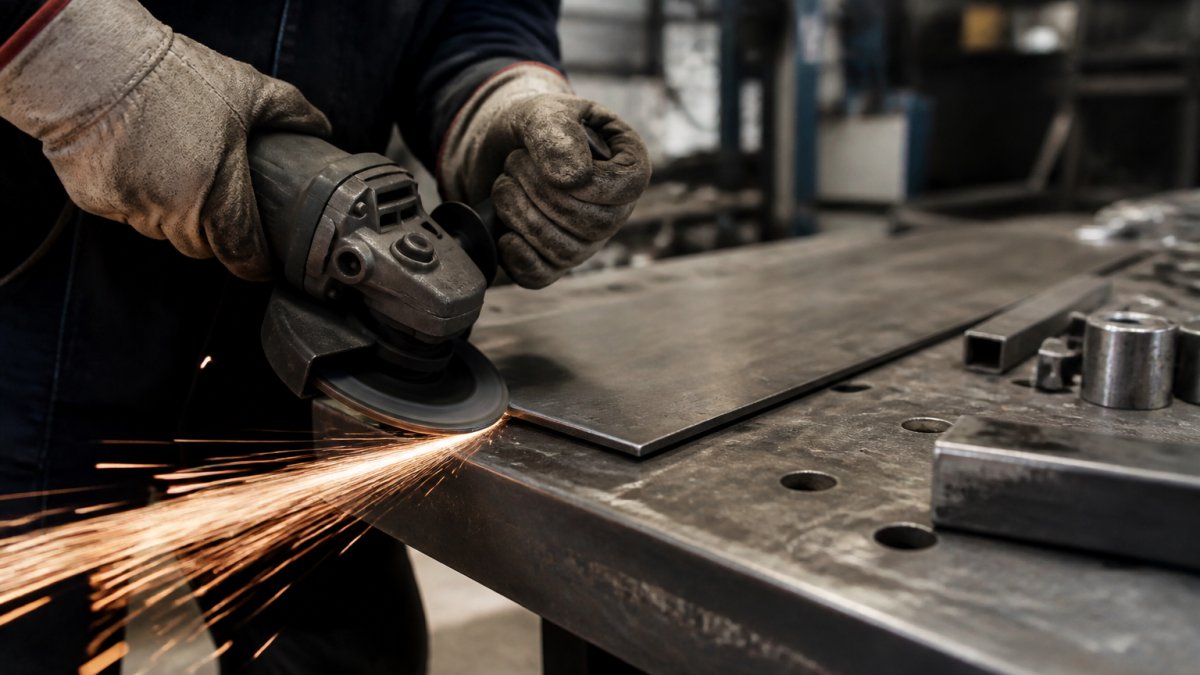
Grinding wheels for metal fabrication handle the heavy lifting: knocking down weld crowns, leveling plate edges, and removing mill scale before finishing. The wheel type matters more than the brand on the label.
Bonded Wheel Types and What Each One Does on Steel
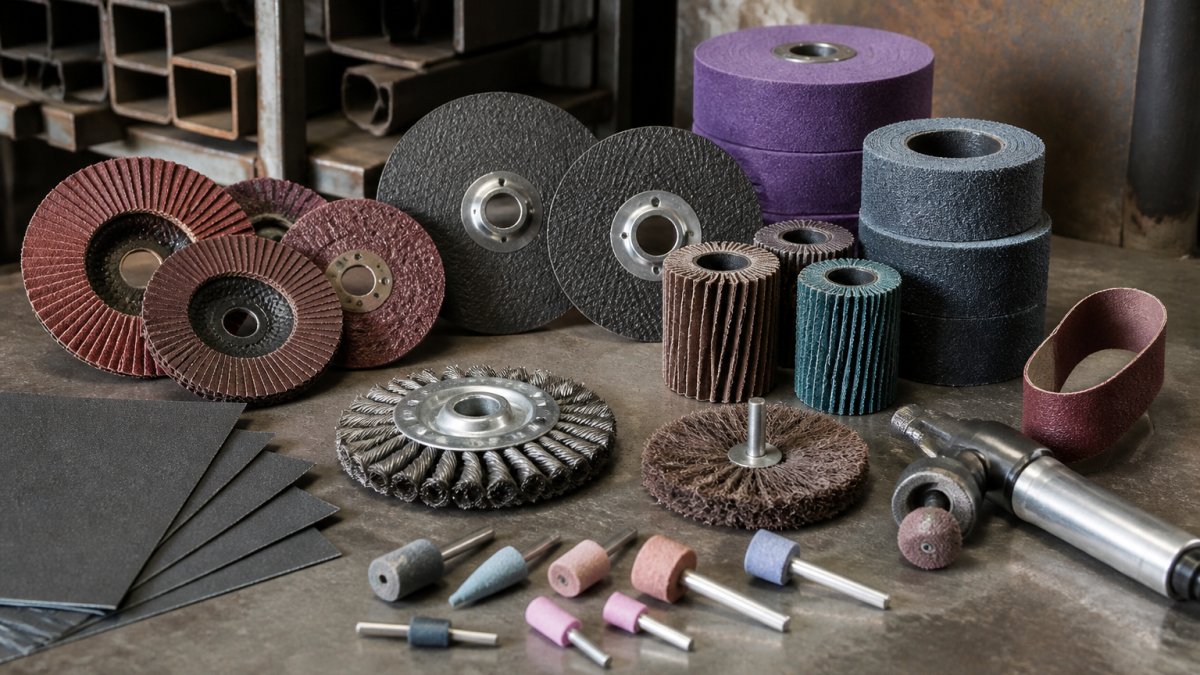
Depressed-center wheels are the workhorse for angle grinders. They remove material fast and tolerate the aggressive angles operators actually use. Type 1 straight wheels suit bench and pedestal grinders where the workpiece is presented to the wheel, not the other way around. Cup wheels shine on flat surfaces and large weld areas where you need surface contact rather than edge contact.
Aluminum oxide suits carbon steel. Zirconia alumina lasts longer on stainless and heavier stock removal. Ceramic grain costs more but holds its edge under high pressure, which matters when the wheel is doing the work and the operator isn’t leaning on it.
Match the wheel’s maximum RPM rating to the grinder’s no-load RPM, not its operating speed. An over-speed wheel is a safety hazard, and it also cuts poorly because the bond can’t release grain correctly.
Flap Discs for Metal: Blending, Deburring and Edge Work
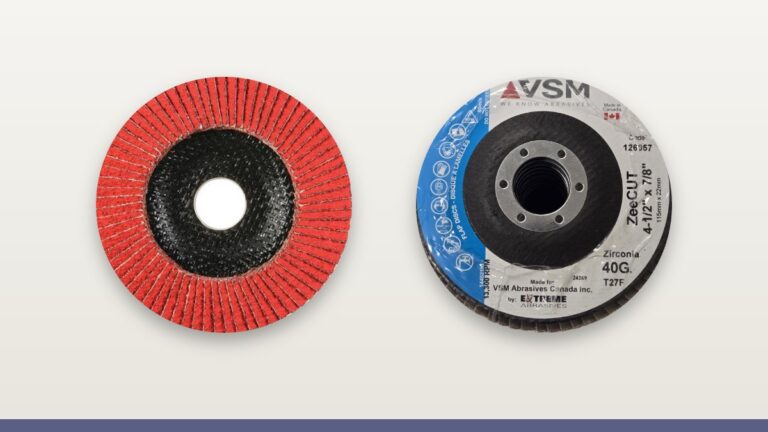
Flap discs for metal replace the two-step grind-then-finish routine with a single pass. The overlapping abrasive flaps grind, blend, and polish at the same time, which is why they’ve largely displaced resin fiber discs in most fabrication shops.
The trade-off is pressure sensitivity. Flap discs need consistent, moderate pressure. Lean into one and the flaps glaze over; barely touch it and you’re just polishing the surface.
Three variables decide performance:
- Flap density. Denser discs last longer but cut slower. Sparse flaps cut aggressively and wear faster.
- Backing type. Fiberglass backing is rigid and flat, good for edge work. Plastic or trimmable backing conforms to contours.
- Grain type. Zirconia for general steel work, ceramic for stainless and high-pressure applications.
For deburring cut edges, a 40 or 60 grit flap disc removes the burr and leaves a finish that’s ready for paint or weld prep. For blending weld toes into base metal, step up to 80 grit. Anything finer is finishing work, not blending.
Abrasive Grit Selection for Metal: Matching the Number to the Task
Abrasive grit selection for metal follows one rule: start coarse enough to remove the defect, then step through grits fine enough to reach the required finish. Skipping grits doesn’t save time. It leaves scratches that show up after paint.
Grit Stages From Rough Weld Removal to Final Finish
| Stage | Grit Range | Purpose | Typical Tool |
|---|---|---|---|
| Rough stock removal | 24-36 | Weld crown removal, heavy scale | Grinding wheel |
| Weld blending | 40-60 | Flattening welds, deburring | Flap disc |
| Surface prep | 80-120 | Pre-paint scratch pattern | Flap disc or fiber disc |
| Finishing | 120-180 | Cosmetic finish | Resin fiber or paper disc |
| Polish prep | 220+ | Stainless and aluminum finishing | Fine disc or belt |
The jump between stages should be roughly double the grit number. Going from 36 straight to 120 leaves deep scratches that a 120 disc can’t remove. Two intermediate steps cost less than rework.
Don’t reuse a disc that’s been run on carbon steel on stainless. Embedded steel particles cause rust contamination that shows up weeks later under a finish. Keep dedicated discs for stainless work.
Weld Grinding and Finishing Abrasives: Building a Sequence That Works
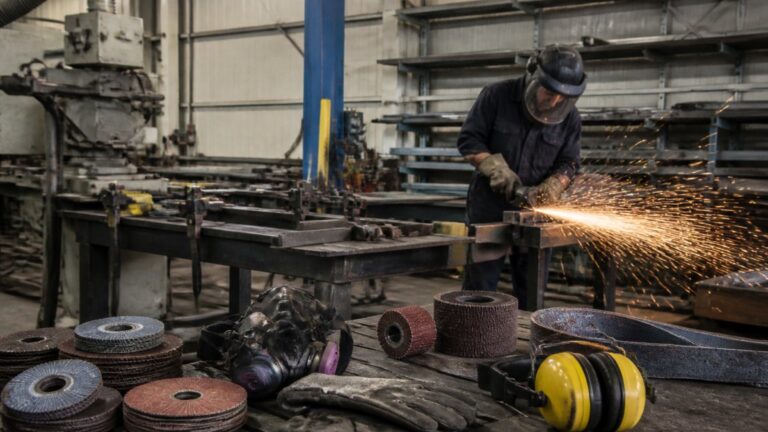
Weld grinding and finishing abrasives work as a system, not a collection of individual tools. The sequence matters as much as the products in it.
A sequence that holds up in production:
- Cut the weld crown with a grinding wheel or a hard-disc wheel rated for the steel type.
- Blend the toe with a 40-60 grit flap disc, keeping the disc flat to the surface.
- Refine the scratch pattern with 80-120 grit until the surface reads uniform.
- Finish only if the part is visible or gets a coating that shows surface defects.
The most common mistake is operators treating step two as optional. Skipping from a grinding wheel straight to a fine disc leaves a wavy surface that no amount of finishing will flatten.
Build your abrasive sequence around the finish the part actually needs, not the finish the operator can achieve. Over-finishing non-visible parts wastes labor and disc life.
What to Ignore When Buying Metal Fabrication Abrasives
Price per disc is the least useful number on a quote. What matters is cost per finished part, and that depends on how many parts one disc handles before it stops cutting.
Ignore these when comparing suppliers:
- “Premium” labels with no grain specification. Ask what the grain is. If the answer is vague, the product probably is too.
- Grit numbers without tolerance ranges. A 60 grit disc that’s actually 50-70 cuts inconsistently. Precision-coated products hold tighter tolerances.
- Bulk pricing that ignores usage patterns. Stocking a grit you use twice a year ties up cash and shelf space.
What you should track instead is reorder frequency by grit and product. That data tells you which items belong on a recurring shipment and which you can order as needed.
That’s where IBEX Enterprises fits for most shops. Our platform lets purchasing teams set up automated recurring shipments for high-turnover items, pay by purchase order, and reorder from a personalized dashboard in a few clicks. For a shop running through 60 grit flap discs weekly, that means the stock shows up before anyone notices it’s low, and nobody spends Friday afternoon chasing a supplier.
We carry professional-grade abrasives from established brands like Sia, Festool, and Dynabrade, and we support both large operations and smaller shops that need the same reliability without the same volume.
Metal fabrication doesn’t reward guesswork on consumables. The wrong wheel or grit costs you labor, rework, and downtime, and it usually shows up as a missed deadline rather than a line item. IBEX Enterprises helps shops avoid that by combining professional-grade abrasives with procurement tools built for purchasing managers: automated recurring shipments, purchase order support, and rapid reordering from a personalized dashboard. Request a quote and we’ll help you build a supply plan around the grits and products your shop actually runs through.
Frequently Asked Questions
What abrasives are best for metal fabrication?
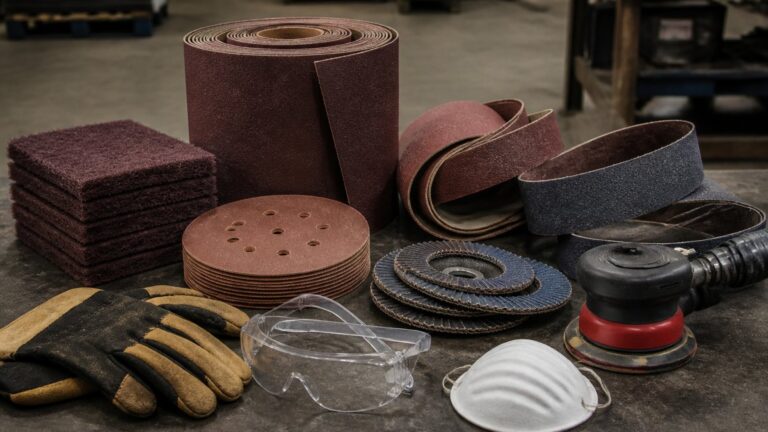
It depends on the stage of the job. Bonded grinding wheels handle heavy stock removal and weld prep. Flap discs cover blending, deburring and edge work in one step. Coated abrasives on discs and belts handle finishing and surface prep. Zirconia and ceramic grains cut faster and last longer on steel than aluminum oxide, which makes them the better choice for high performance metal fabrication abrasives where consistency matters across a production run.
Are flap discs or grinding wheels better for metal fabrication?
Neither replaces the other. Grinding wheels remove material faster and hold up to heavy weld crowns, so they suit the first pass. Flap discs leave a finer, more consistent scratch pattern and can blend a weld without a second tool change. Many shops run a hard wheel for roughing, then switch to a flap disc for blending and finishing. Matching the tool to the stage cuts total time per part more than buying one premium disc for everything.
What abrasive grit should I use on metal?
Start coarse and work finer. For weld removal and heavy stock, 36 to 60 grit is typical. For blending and general surface prep, 80 to 120 grit covers most work. Finishing steps move to 180 grit and beyond. Skipping grits does not save time, it leaves scratches that show up after paint or polish. Abrasive grit selection for metal should follow the finish spec on the drawing, not what happens to be on the shelf.
How can I reduce heat and discoloration when grinding stainless steel?
Heat buildup is the main cause of discoloration and it also risks altering the metal’s corrosion resistance. Use a fresh, sharp abrasive rather than a worn one, keep the grinder moving instead of dwelling in one spot, and avoid pressing hard to speed up removal. Lower grits on a soft backing can run cooler. If color still appears, step back to a finer disc and lighten the pressure rather than grinding harder to remove it.