
If you’re outfitting a sander or restocking your disc inventory, the first question is grit — but the second question is backing: hook and loop vs PSA. Most shops standardize on one or the other for a reason: changing back and forth between backing types means changing backing pads, and pads are not free.
This hook and loop vs PSA guide explains what each backing actually is, the situations each is better at, and what to do if your shop runs a mix of tools that need both.
In this article
What “hook and loop” and “PSA” actually mean
Hook and loop is the same fastener technology in your jacket’s velcro closure. The backing pad on your sander has a felt-like loop surface; the back of your sanding disc has tiny hooks. You press the disc onto the pad, the hooks grab the loops, and the disc stays put through any sanding force you put on it. To change discs, you peel and stick a new one.
PSA stands for pressure-sensitive adhesive. The back of a PSA disc is a sticky rubber-resin adhesive — like a giant sticker. The backing pad is a smooth, flat surface. You stick the disc to the pad, sand, then peel off and discard. New disc, new sticker.
Different mechanisms, different trade-offs. That is the whole hook and loop vs PSA debate in one line.
Hook and loop — the upside
Disc swaps in 5 seconds. This is the headline feature. You can swap from 80 to 120 to 220 in the time it takes to peel and stick. For a finisher running progressive grit on a curved surface, that’s a real productivity gain.
You can reuse a half-worn disc. Pull a disc off mid-life, save it, throw on a different grit, then put the original back on later to finish the job. The hook-and-loop doesn’t lose grab from being attached and detached repeatedly.
Cleaner pad surface over time. The hook surface doesn’t get gummed up the way an adhesive surface does.
Dust-extraction friendly. Hook and loop is the standard on every dust-extraction sander made in the last 15 years — Festool, Mirka, Bosch, Makita — because the holes for vacuum airflow are easier to align on a felt-pad surface than on a glue-pad surface.
Hook and loop — the downside
Discs can slip on heavy stock-removal work. When you’re hogging off material at high pressure with a coarse grit, hook-and-loop can let go. Not common, but it happens — usually on aggressive belt sanding with a coarse zirconia or ceramic. Modern hook-and-loop is much better than the older versions, but PSA still wins on raw shear hold.
Higher cost per disc. The hook-and-loop backing adds a few cents per disc. At case quantity, it’s noticeable.
Pad wears out faster. The loop surface on the pad eventually mats down or gets contaminated with sanding debris. How long a pad lasts depends on how hard it is run, but plan on replacing it as a normal wear part.
PSA — the upside
Unbeatable shear hold. A PSA disc on a smooth pad cannot slip under any normal sanding pressure. For heavy grinding, weld blending, and aggressive stock removal — especially on stationary sanders — PSA is the right choice.
Lower cost per disc. PSA discs are cheaper because there’s no fabric backing.
Pad lasts essentially forever. A smooth PSA pad isn’t subject to felt-mat wear. As long as the pad surface stays clean, it can run thousands of disc cycles.
Better for fine paint rubout. PSA discs sit flatter on the pad than hook-and-loop (no felt layer between abrasive and pad). For 1500-, 2000-, 3000-grit clearcoat work where flatness matters at the micron level, PSA is the spec choice.
PSA — the downside
Single-use, no save-for-later. Once a PSA disc is peeled, the adhesive is contaminated with pad-residue and dust. You can’t reapply it. So you can’t run a “save this 220 for the next pass” workflow.
Slower swap. Peeling a PSA disc, especially after a long sanding cycle, is slower than peeling a hook-and-loop disc. Sometimes you need a putty knife. For finishing work with frequent grit changes, this adds up.
Adhesive residue on the pad. Over time, the pad accumulates adhesive transfer that’s hard to clean. Eventually the pad surface gets uneven and needs to be cleaned with a solvent — or replaced.
Most modern RO sanders ship with hook-and-loop pads, not PSA. So if you want to run PSA, you’ll need to replace the pad on a new sander before you can use PSA discs.
Hook and loop vs PSA: a quick guide
| Situation | Use this | Why |
|---|---|---|
| Finish-quality work with frequent grit changes | Hook and loop | Fast swaps, save half-used discs |
| Random orbital with dust extraction | Hook and loop | Native fit on most modern sanders |
| Heavy stock removal on portable sanders | Either (slight preference PSA) | PSA won’t slip; H&L is convenient |
| Stationary belt or disc sander | PSA | Shear hold, lower per-disc cost |
| Paint shop clearcoat rubout (high grit) | PSA film disc | Flatness at micron level |
| Curved surface finishing | Hook and loop | Quick grit progression |
| Crew-tool / DIY occasional use | Hook and loop | Lower learning curve, easier swaps |
| Production weld blending | PSA | Hold + cost at volume |
Hook and loop vs PSA for dust extraction
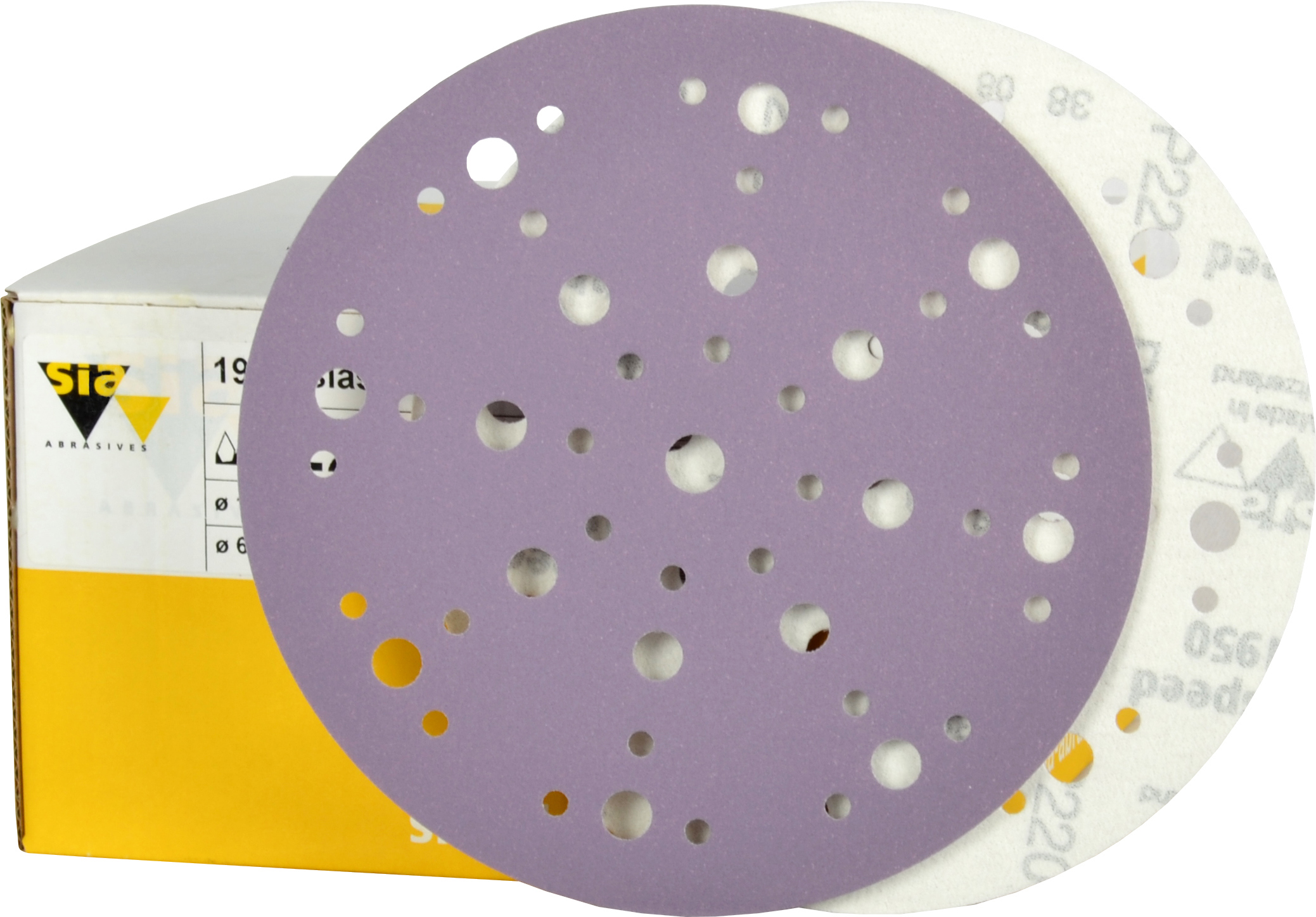
Dust extraction is often what settles the hook and loop vs PSA question on a random orbital. Most extraction sanders ship with hook-face pads that have holes through them, and hook-and-loop discs come punched in matching patterns, such as the 49-hole Festool layout or the 8-hole pattern used on many 5-inch sanders.
PSA discs can be punched for extraction too, and vacuum PSA pads exist, like the 5-inch Dynabrade 56104. In practice, though, most PSA work is done on non-vacuum tools, stationary sanders and hand blocks. If clean air and visibility are a priority, hook and loop on an extraction sander is usually the simpler setup.
Hook and loop vs PSA by trade
Cabinet and furniture shops. Hook and loop almost every time. Woodworkers change grits often, sand curves and edges, and run extraction to keep dust off the work. A 6-inch random orbital with hook-and-loop discs from 80 to 220 covers most of the job.
Auto body and refinishing. Both. Hook and loop on dust-extracting random orbitals for filler and primer, where grits change often. PSA on long boards and hand blocks, and on some fine finishing steps where operators prefer the flatter contact.
Metal fabrication. PSA is common on stationary disc sanders and for heavy grinding, where hold matters more than swap speed. Hook and loop is used for finer surface prep with a random orbital. For weld removal, a fibre disc or flap disc on an angle grinder is often faster than either; see our VSM page.
Composites and boat work. Mostly hook and loop on extraction sanders, because fibreglass and gelcoat dust is unpleasant and grit changes are frequent.
Interface pads: a third option
An interface pad is a thin foam layer that sits between the backing pad and the disc. It has loops on one side and hooks on the other, so it only works with hook-and-loop systems. The foam lets the disc follow curves and profiles without cutting through edges. Festool sells interface pads for its 5-inch and 6-inch sanders, and soft-density pads like the Dynabrade 56195 and 56197 do a similar job built into the pad itself. There is no real PSA equivalent, which is one more reason finishers lean toward hook and loop.
Pads from Dynabrade and other makers are sold in both versions for many sanders, so you can set up one tool for each system if your work calls for it.
What if I have a mixed shop?
Plenty of shops run a Festool ETS 150 (hook and loop) for fine finishing and a Burr King 1″ × 42″ with a PSA disc pad on the contact wheel for weld blending. That’s normal — they’re doing different jobs with different best-backing answers.
Two pads, two SKU lines, no compromise on either side. In a mixed shop, hook and loop vs PSA is not an either-or choice.
If you’re trying to standardize for inventory reasons, our default recommendation: hook and loop for everything 80 grit and finer, PSA for everything 60 grit and coarser. Aligns the backing choice with the typical workflow each abrasive is being used for.
Can I convert a sander from one backing to the other?
Sometimes. On most random orbitals and many disc sanders, the backing pad is a screw-on or pull-off replacement — Festool, Mirka, Bosch, and Makita all sell replacement pads in both hook-and-loop and PSA versions for the same sander. So you can fit a PSA pad and run PSA on a hook-and-loop sander, or the reverse.
Check your sander’s parts diagram or contact us with the model number and we’ll tell you whether a swap pad is available.
How to change a backing pad
- Disconnect the power or air. Unplug an electric sander or disconnect the air line before you touch the pad.
- Remove the old pad. Most random orbital pads unscrew from the spindle. Some tools have a spindle lock or need a pad wrench; check the manual.
- Check the thread. Pads are made in different threads, such as 5/16 inch-24 on many North American air sanders. The new pad has to match.
- Fit the new pad. Screw it on by hand until snug, then tighten as the manual says. Do not over-tighten.
- Test run. Run the sander briefly with a disc fitted and check for vibration before you start work.
Caring for PSA pads and discs
PSA adhesive leaves a little residue on the pad every time a disc is peeled off. Clean it off regularly with a cleaner that is safe for the pad material, so the next disc sits flat. A lumpy PSA pad gives a lumpy finish.
Store PSA discs and rolls at room temperature. Cold makes the adhesive stiff and less sticky, and heat can make it soft and messy. Keep the release liner on until you are ready to use the disc.
Caring for hook-and-loop pads
Never run a hook-face pad without a disc on it. The bare hooks heat up and melt quickly against the work. Blow dust out of the hook face from time to time, and replace the pad when discs stop holding or start flying off. A worn pad is one of the most common causes of hook-and-loop discs slipping.
Making the hook and loop vs PSA decision for your shop
The hook and loop vs PSA choice comes down to three questions. Answer them for each tool, not for the whole shop.
- How often do you change grits? Several times per part points to hook and loop. One grit for a long run points to PSA.
- Do you use dust extraction? If yes, hook and loop on a matching hole pattern is the simpler path.
- How much force goes through the disc? Heavy grinding and stationary sanding favour PSA. Finishing and light stock removal suit hook and loop.
Most shops end up with hook and loop on their random orbitals and PSA on stationary sanders and long boards. That is not a compromise; it is using each system where it works best. Thinking about hook and loop vs PSA tool by tool, rather than picking one for everything, is what keeps both disc stock and pad costs down.
Is hook and loop vs PSA different on 5-inch and 6-inch sanders?
The trade-offs are the same at both sizes. What changes is the hole pattern and the pad, so check your sander before ordering either type of disc. If you are unsure, send us the sander model and we will confirm the right disc and pad.
What IBEX stocks for each
Hook and loop discs (Sia):
- 6-inch Siaspeed 49-hole discs for Festool sanders, 120 to 320 grit
- 5-inch Siaspeed discs with a Festool-compatible pattern, 80 to 320 grit
- 5-inch Siaspeed 8-hole discs for most other 5-inch sanders, 40 to 600 grit
- 6-inch and 5-inch ultra-fine discs up to 1500 grit
- siaflex 1948 flexible discs and foam-backed discs for curves and fine finishing
PSA discs and rolls (Sia):
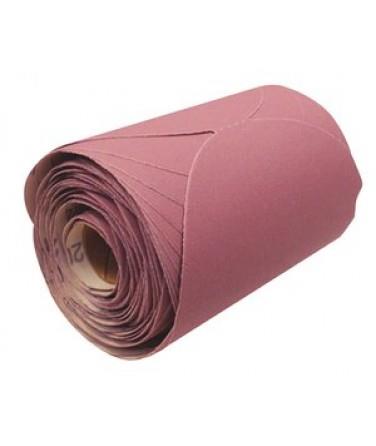
- 6-inch ceramic PSA discs, 100 per roll
- 5-inch ceramic PSA discs, 100 per roll, 80 to 600 grit
- 6-inch PSA discs for fillers, lacquer and paint
- 2-3/4-inch × 25-yard PSA rolls for long boards and hand blocks
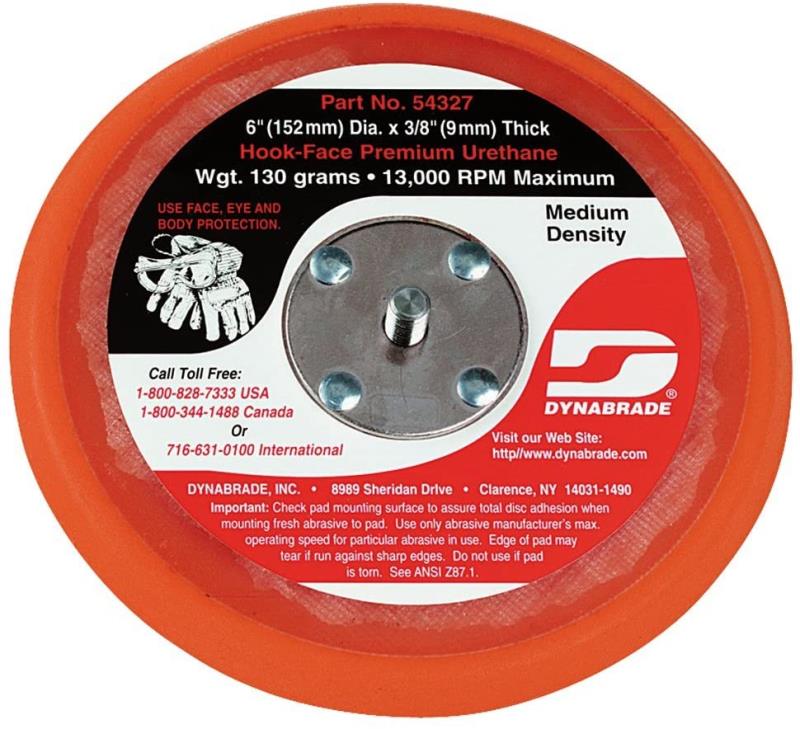
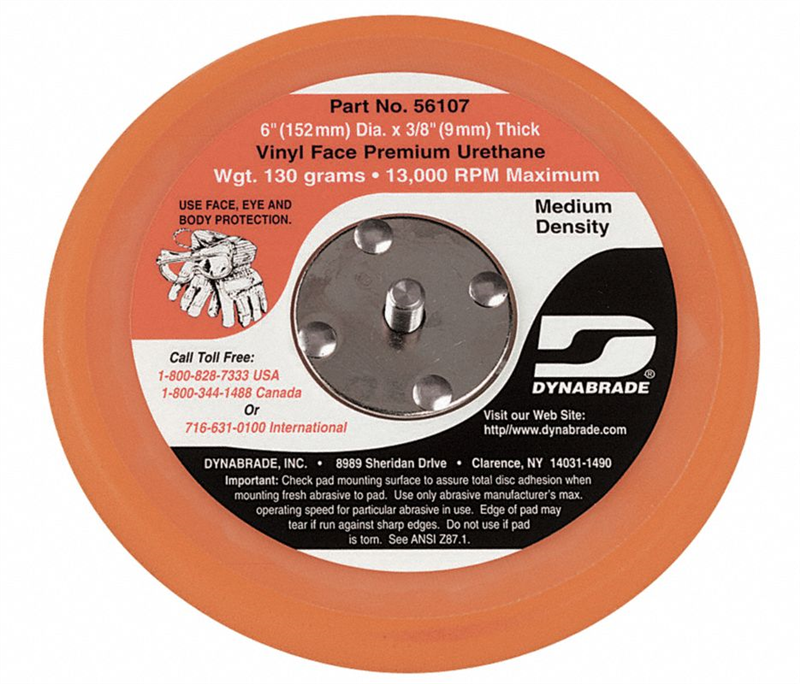
Backing pads (Dynabrade): hook-face pads in 5-inch and 6-inch medium density and 5-inch and 6-inch soft density, plus vinyl-face PSA pads in 5-inch and 6-inch and a 5-inch vacuum PSA pad. For other pads, email info@ibexent.com with your sander make and model.
Hook and loop vs PSA questions
Can I put a PSA disc on a hook-and-loop pad?
No. PSA adhesive will not hold properly on a hook face, and it will clog the hooks. Swap to a smooth PSA pad first.
Which is cheaper over time?
PSA discs usually cost a little less each, and PSA pads last a long time. Hook-and-loop discs can be reused across grit changes, which saves discs on finishing work. For heavy, continuous sanding PSA often wins on cost; for frequent grit changes, hook and loop often does.
Which is better for a random orbital sander?
For most people, hook and loop. It is what most random orbitals ship with, it works with dust extraction, and it makes grit changes fast.
Why do my hook-and-loop discs keep flying off?
Usually the pad is worn, the pad is overheating, or the disc does not match the pad size. Replace the pad, use lighter pressure, and check that the disc diameter matches the pad.
Hook and loop vs PSA in short
- Hook and loop: fast swaps, dust-extraction-friendly, save partial discs. Best for fine finishing and curved work.
- PSA: unbeatable hold, lower per-disc cost, longer pad life. Best for heavy stock removal and stationary work.
- Mixed shops: normal — keep separate SKUs for each tool.
- Standardization rule of thumb: hook and loop for 80 grit and finer, PSA for 60 grit and coarser.
Need help speccing? Call 403-250-3399 or email info@ibexent.com. We’ll look at your tool list and settle hook and loop vs PSA for each tool in your shop.
Related reading
- Sanding Disc Hole Patterns: Which Discs Fit Your Sander →
- How to Choose the Right Sanding Grit for Your Job →
- Sia Abrasives — Canadian Catalog →
- VSM Abrasive Belts & Discs — Canadian Distributor →
Posted by IBEX Enterprises, Calgary AB.