Last Updated: November 2, 2026
Quick Summary
Industrial grinding tools for body shops are powered grinders and abrasive consumables used to remove welds, blend panels, dress edges, and finish metal before paint. The category covers die grinders, angle grinders, straight grinders, and the discs that fit them. Match the format to the task: die grinder for access, angle grinder for volume, straight grinder for reach.
- Die grinders run accessories with a 6 mm or 1/4-inch shank and commonly spin at 20,000-25,000 RPM for pneumatic units.
- Most body-shop angle grinder work sits in the 115 mm to 125 mm range for control on vertical panels.
- A 1/4-inch die grinder commonly draws 4-6 CFM at 90 PSI.
- Ceramic grain suits stainless and harder steels, while zirconia handles mild steel at lower cost per disc.
- Size the compressor for tools running at once and check pressure at the tool, not the tank.
Table of Contents
- Why Grinder Choice Decides Body-Shop Turnaround
- Die, Angle, and Straight Grinders: Which Does What in a Body Shop
- Pneumatic Die Grinders for Auto Body Work: Tight-Area Control
- Angle Grinders for Automotive Repair: Weld Dressing and Panel Prep
- Abrasive Discs for Weld Removal: Grit, Backing, and Material Match
- Grinder Safety Equipment and Air-System Requirements
- Request a Quote and Build a Recurring Consumables Order
- Frequently Asked Questions
Why Grinder Choice Decides Body-Shop Turnaround
The logic is simple. A grinder that is too aggressive gouges a panel and forces rework. One that is too slow leaves weld crowns standing and burns through abrasive discs.
Below, we break down which grinder handles which repair task, how abrasive choice changes the result, and what a shop actually needs on the bench.
Industrial grinding tools for body shops are the powered grinders and abrasive consumables used to remove welds, blend panels, dress edges, and finish metal before paint.
Die, Angle, and Straight Grinders: Which Does What in a Body Shop
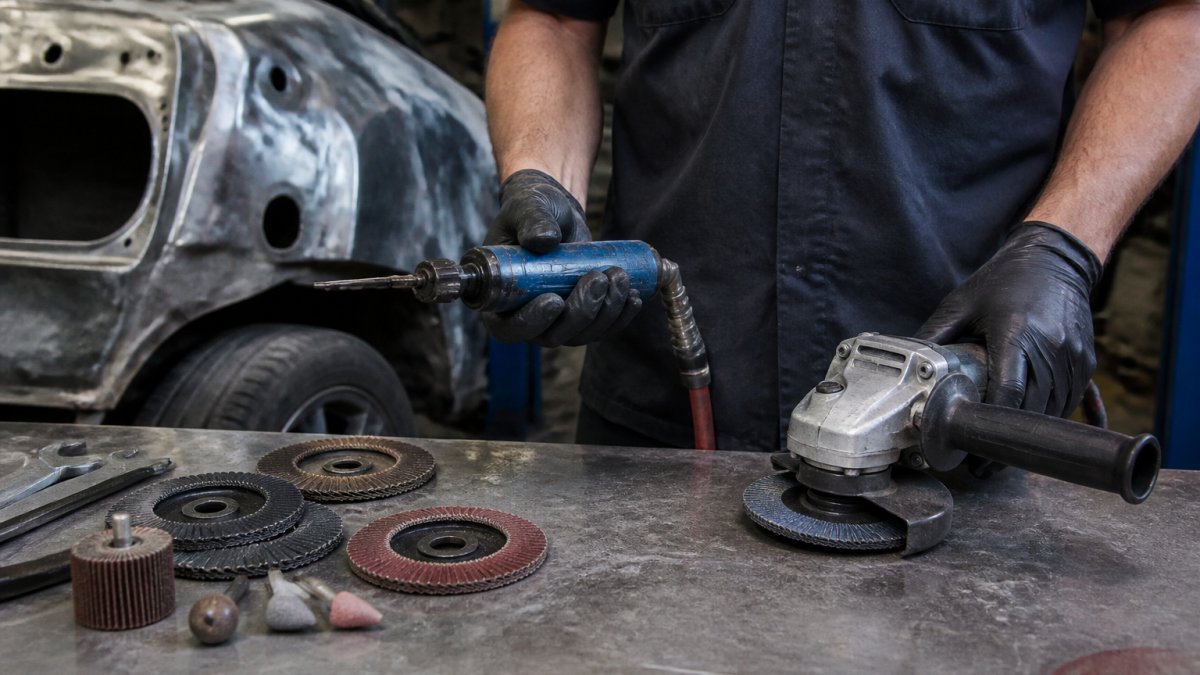
Each grinder type solves a different problem, and buying one to do all three jobs is the most common mistake we see. The useful comparison is not brand versus brand but format versus format: disc size, spindle or collet, speed, access, and the repair task each one owns.
Die grinders: small head, tight access
Die grinders run accessories with a 6 mm or 1/4-inch shank and spin at high free speed, commonly in the 20,000-25,000 RPM range for pneumatic units.
The trade-off is material removal rate: a small burr removes far less stock per pass than a 5-inch disc, so die grinders are for precision cleanup, not for flattening a long MIG seam. Pneumatic models are compact and easy to control one-handed, but they are air-hungry (see the air-system section below).
Angle grinders: the heavy-removal workhorse
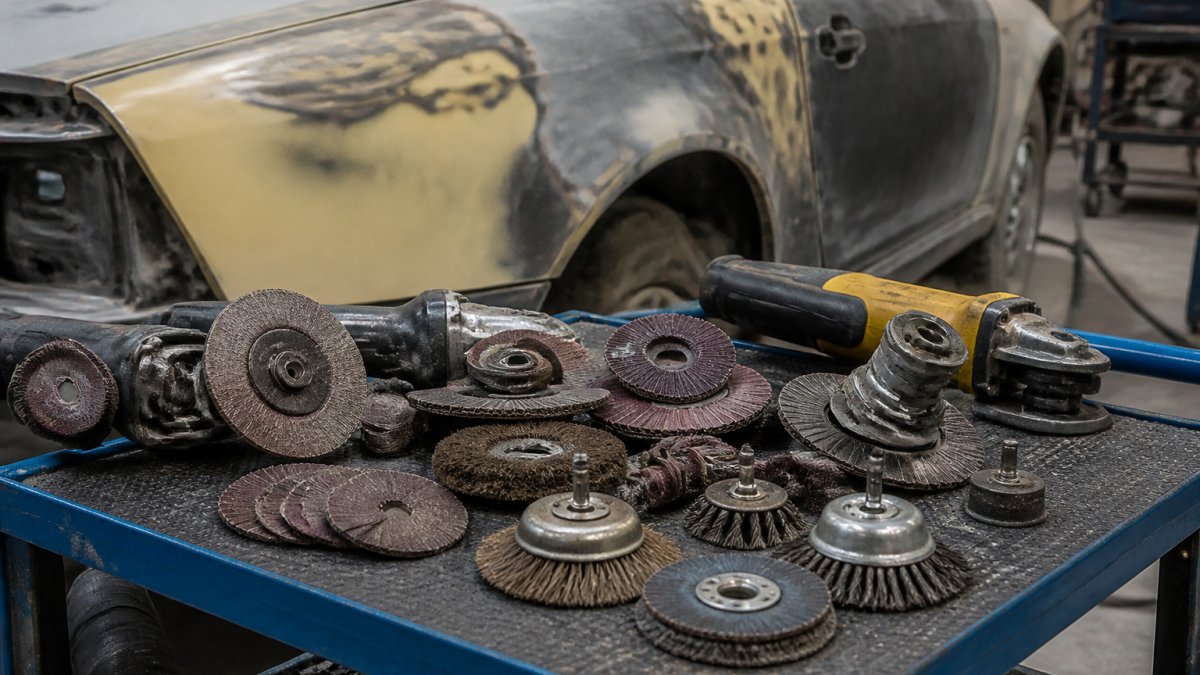
Angle grinders carry 4-1/2-inch to 5-inch discs and are the default for weld dressing, paint stripping, and cutting out rusted sections.
Speed matters here. A typical 4-1/2-inch angle grinder runs around 10,000-11,000 RPM no-load, and the disc must be rated for at least that speed. A disc rated below the tool’s max RPM is a safety problem, not a bargain. Angle grinders demand two hands and respect: a tipped disc gouges, and a gouge means filler and sanding time you did not budget.
Straight grinders: reach into recesses
Straight grinders run shank-mounted abrasives on a long, in-line body, which lets the operator reach internal welds, recessed seams, and deep panel returns where an angle grinder’s guard and disc angle get in the way. They are slower than an angle grinder for flat panel work but excel at internal weld cleanup and areas where the tool must approach the work head-on rather than from the side.
Side-by-side selection
| Format | Typical accessory | Access strength | Removal rate | Best body-shop tasks |
|---|---|---|---|---|
| Die grinder | 6 mm or 1/4-inch carbide burr, small flap wheel, quick-change disc | Tight seams, jambs, plug welds | Low to moderate | Weld seam cleanup, blending in corners, slot and seam work |
| Angle grinder | 4-1/2 to 5-inch fibre disc, flap disc, cutting wheel | Flat and gently curved panels | High | Weld crown removal, paint stripping, rust cut-out |
| Straight grinder | Shank-mounted burr or small abrasive | Recessed and internal areas | Low to moderate | Internal weld dressing, deep panel returns |
A common mistake is using an angle grinder where a die grinder belongs. The larger disc catches an edge and digs in, and the panel needs filler to recover. The reverse error, trying to flatten a long weld crown with a die grinder, burns time and burrs without moving enough metal.
Grain choice matters as much as tool type. Our guide to ceramic vs zirconia flap discs explains which abrasive suits mild steel, stainless, and aluminium before you commit to a disc order.
Match the format to the task, not the other way around: die grinder for access, angle grinder for volume, straight grinder for reach. A shop that owns one of each in the right size covers more repair tasks than a shop that owns three angle grinders.
Pneumatic Die Grinders for Auto Body Work: Tight-Area Control
Pneumatic die grinders for auto body work win on control, not raw power. Their small heads reach welds and seams that an angle grinder cannot touch without damaging surrounding metal.
The trade-off is air consumption. A die grinder running a 6 mm or 1/4-inch shank carbide burr needs steady pressure and volume, and a shop running several at once will feel it on a small compressor.
In practice, many shops keep two die grinders set up: one with a burr for weld removal and one with a small flap wheel for blending.
Angle Grinders for Automotive Repair: Weld Dressing and Panel Prep
Angle grinders for automotive repair do the heavy removal: dressing MIG welds flat, stripping paint to bare metal, and cutting out rusted sections.
Control is where shops separate good results from rework. Keep the disc flat to the panel, let the abrasive cut, and avoid tipping the tool on edge.
For weld dressing specifically, a flap disc blends the crown while leaving a finish close to paint-ready. A grinding wheel cuts faster but leaves deeper scratches that need a second pass.
Abrasive Discs for Weld Removal: Grit, Backing, and Material Match
Abrasive discs for weld removal are where most of the money goes, and where the wrong pick costs the most. Grit, backing, and grain all need to match the metal and the finish stage.
Start coarser than you think for weld crowns, then step up through grits. Skipping a grit forces the finer disc to do work it cannot handle, and it wears out early.
- Ceramic grain suits stainless and harder steels, staying cool and cutting consistently.
- Zirconia grain handles mild steel and general weld blending at a lower cost per disc.
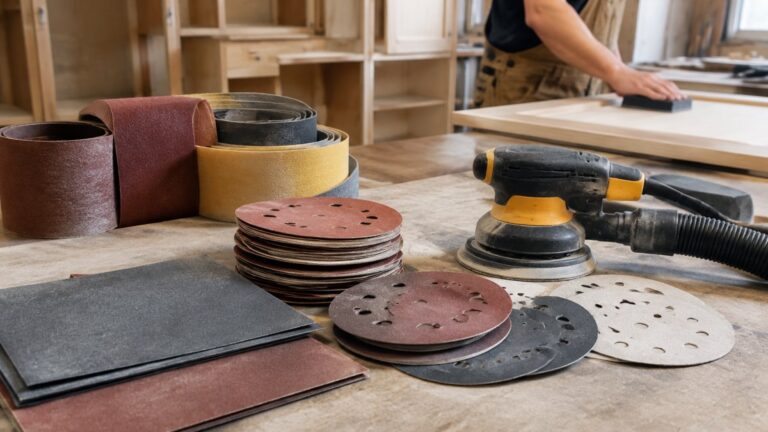
- Fibre discs remove stock fast on flat panels; flap discs blend and finish in one step.
- Quick-change discs speed up swaps on small die grinders in tight areas.
| Task | Grinder | Abrasive | Starting Grit |
|---|---|---|---|
| Weld crown removal | Angle grinder | Ceramic fibre disc | 36-40 |
| Weld blending | Die grinder | Flap wheel | 60-80 |
| Panel stripping | Angle grinder | Flap disc | 40-60 |
| Tight-seam cleanup | Die grinder | Carbide burr or small flap wheel | N/A |
| Final finish before primer | Angle grinder | Flap disc | 120 |
Grinder Safety Equipment and Air-System Requirements
Safety gear and air supply both affect how well a grinder performs and how safely a shop operates. Every grinder in a body shop throws sparks, dust, and noise, and the controls need to match.
PPE that matches the hazard
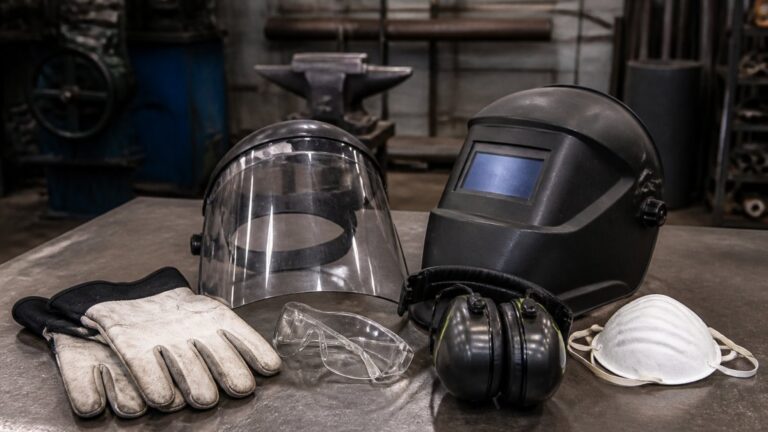
At minimum, fit each operator with impact-rated eye protection and a face shield for grinding, hearing protection, and respiratory protection rated for metal dust. For a deeper guide on the protective gear a metal shop actually needs, see what protective gear do metal shops really need.
Dust and fume control matter as much as personal gear. Grinding paint, primer, and body filler generates fine particulate that settles across the bay; local exhaust at the work surface or a downdraft table keeps it out of the air and off freshly prepped panels.
Air-system sizing: the number that decides performance
Pneumatic die grinders and angle grinders are rated by average air consumption in cubic feet per minute (CFM) at a stated pressure, typically 90 PSI.
The compressor rule of thumb is to size for the tools running at once, not the total in the shop.
Pressure at the tool is the other half of the equation. Long hose runs and undersized fittings drop pressure between the compressor and the tool. Check pressure at the tool with a gauge, not at the tank, and use hose and fittings sized for the demand.
A grinder that runs at low air pressure rubs instead of cuts. The disc glazes, the panel heats, and the operator pushes harder to compensate, which is when discs fail. Fix the air supply before blaming the abrasive.
Electric versus pneumatic in the body shop
Pneumatic tools win on size, weight, and durability in a production bay, and they avoid electric shock risk near water and metal dust. Electric grinders win where compressor capacity is limited or where the tool must run continuously; a corded angle grinder delivers consistent power without taxing the air system, and cordless models now cover light blending and spot work. The practical pattern in most shops is pneumatic for high-cycle die-grinder work and electric for heavy angle-grinder removal where air demand would otherwise dominate.
Duty cycle and maintenance
Air tools are rated for intermittent duty; running a die grinder continuously for long periods heats the motor and shortens life. Rotate tools between operators or tasks rather than running one tool flat out all shift. Keep air motors lubricated per the manufacturer’s schedule, blow out the tool body, and inspect discs and guards before each use; a cracked disc or missing guard is a stop-work condition, not a maintenance note.
Size the compressor to the tools running at once, check pressure at the tool, and match PPE to the dust and spark hazard. Air supply and safety controls are what let a grinder perform to its rating.
Request a Quote and Build a Recurring Consumables Order
The final decision is not only which grinder to buy, but how to keep the bench stocked without tying up a purchasing manager’s week. Grinding consumables are used up quickly, and reordering reactively can lead to downtime.
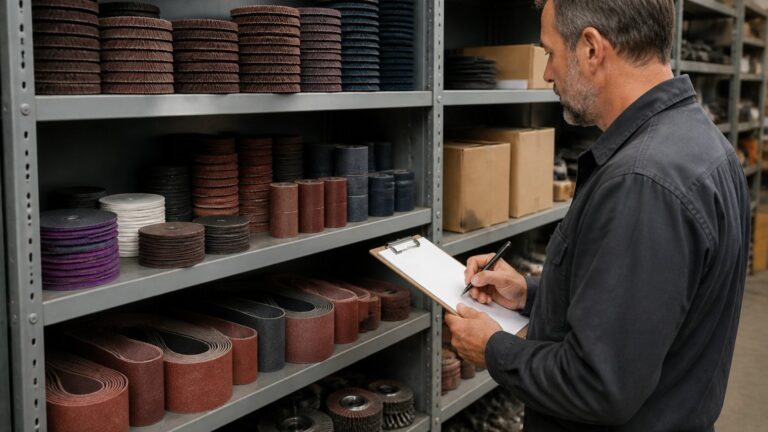
IBEX Enterprises offers a B2B platform with recurring subscription shipments, purchase order payment options, and rapid reordering from a personalized dashboard to help simplify this process. Learn how to automate abrasive reordering for your shop so consumables arrive without manual purchase orders.
Pricing depends on quantity, product mix, and delivery schedule, so request a quote from IBEX Enterprises for current pricing.
Frequently Asked Questions
What grinding tools do auto body shops use?
Most body shops rely on a small set: a pneumatic die grinder for tight areas and detail work, a 4.5- to 5-inch angle grinder for weld dressing and panel prep, and a straight grinder for reach into recessed sections. Abrasive discs, flap wheels, and surface-conditioning discs handle the finishing steps. Shops also keep safety gear, including face shields, hearing protection, and respiratory masks, on hand for every grinding task.
What is the difference between a die grinder and an angle grinder?
A die grinder spins a small abrasive bit or burr at high speed and fits into narrow spaces, so it suits porting, deburring, and cleaning welds in tight corners. An angle grinder uses a larger disc mounted at 90 degrees to the body, giving more torque and surface coverage for grinding welds, rust, and panel edges. Most body shops need both: the die grinder for detail and the angle grinder for heavier stock removal.
Are pneumatic or electric grinders better for a body shop?
Pneumatic grinders are smaller, lighter, and run cooler for long sessions, which helps in production body work. They need a compressor with enough CFM at the tool’s rated pressure; undersized air supply is the most common cause of weak performance. Electric grinders avoid that dependency and suit shops without a strong air system. Many shops run pneumatic die grinders and electric angle grinders side by side.
What abrasive grit should I use for automotive metal repair?
Start coarser for stock removal and move finer for finishing. A 36- to 60-grit disc removes welds and heavy rust, 80-grit smooths the surface before body filler, and 120-grit or finer prepares for primer. Use a disc designed for the material: aluminum and stainless steel need abrasives that resist loading and overheating. Match the grit to the step, not to habit, and change discs when they glaze.
The challenge is not finding industrial grinding tools for body shops. It is building a supply line that keeps the right grinder and the right disc on the bench every day. IBEX Enterprises supports that with recurring shipment subscriptions, purchase order payment options, and rapid reordering from a personalized dashboard, backed by authorized supply of major brands. Get started with IBEX Enterprises and keep your shop stocked and operational.