Pick the wrong grain and a flap disc either glazes over in a few minutes or burns through money on a job a cheaper disc would have done just as well. Pick the right one and the disc keeps cutting until the flaps are gone. The short answer: use ceramic on stainless, hard alloys and heavy pressure work, and use zirconia for everyday grinding and blending on carbon steel. The rest of this guide is the explanation we give over the phone when a shop is choosing which flap discs to stock.
If you would rather talk it through, call us at 403-250-3399 with the metal and the job and we will help you pick a disc.
In this guide
- What is the actual difference between ceramic and zirconia grain?
- When does ceramic earn its higher price?
- When is zirconia the better buy?
- Which grain for stainless steel without contaminating it?
- What about aluminium and other soft metals?
- Quick reference: grain and grit by metal and pressure
- How do I pick the grit once I have picked the grain?
- What are the signs I am using the wrong grain?
- Flap disc questions we get
- Get the right flap discs from IBEX
What is the actual difference between ceramic and zirconia grain?
Both are self-sharpening, which is why both outlast plain aluminium oxide. The difference is how they sharpen.
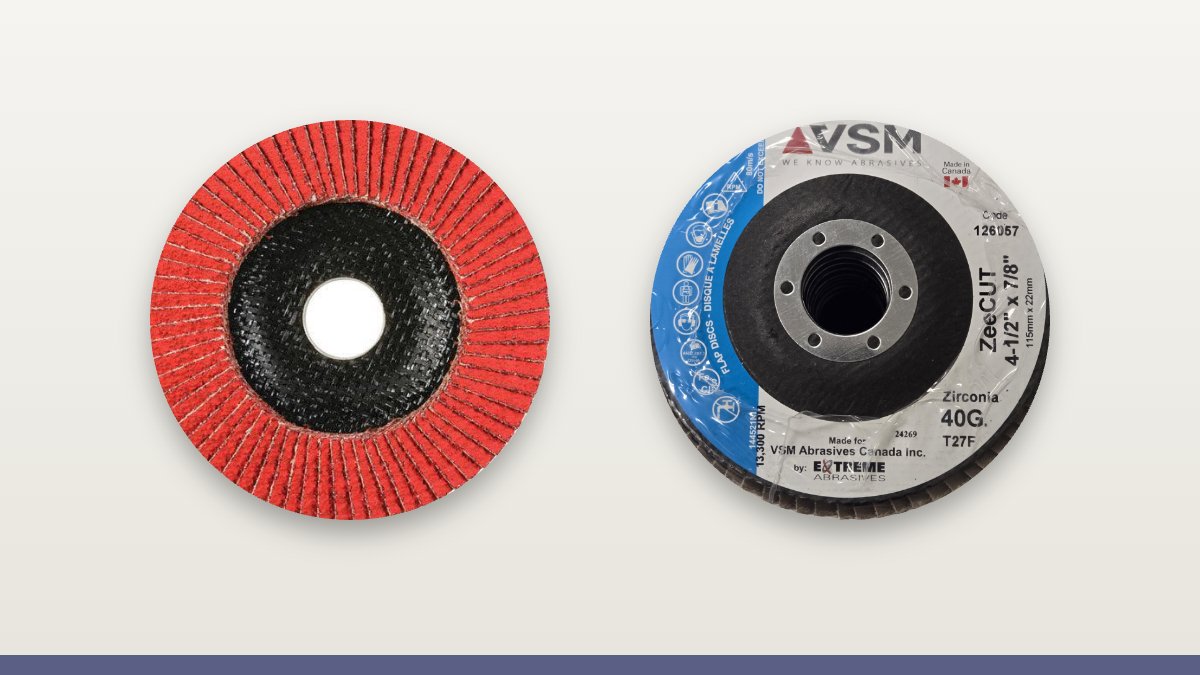
Ceramic grain is a very hard, fine crystal structure. Under pressure, each grain fractures into smaller pieces and exposes a fresh, sharp edge. That keeps it cutting fast and cool, but only if you push hard enough to make it fracture. Run a ceramic disc with a light touch and it can dull and glaze before it ever starts sharpening itself.
Zirconia grain (zirconia alumina) is tough rather than hard. It wears and sharpens steadily under medium pressure, holds up to the knocks of general fabrication, and costs less than ceramic.
So the real question is not which grain is better. It is how much pressure the job and the operator will put on the disc, and how hard the metal is.
When does ceramic earn its higher price?
Ceramic pays for itself when three things line up:
- The metal is hard or heat sensitive. Stainless steel, high strength steel, tool steel and nickel alloys. Ceramic cuts cooler under load, which means less heat tint on stainless and less risk of changing the metal near the weld.
- The operator leans on the grinder. Heavy weld removal, beveling plate and production grinding where the disc is under real pressure all day.
- Disc changes cost you time. On a production line, the time to stop and swap a disc can cost more than the disc itself.
If the job is light blending on mild steel by someone who barely presses, ceramic is money spent on a feature you will never use.
When is zirconia the better buy?
For most general fabrication shops, zirconia is the everyday disc:
- Carbon and mild steel weld grinding and blending
- Removing mill scale and rust
- Mixed work where the same operator moves between jobs all day
- Medium pressure, which is how most people actually run a 4-1/2 in or 5 in grinder
Zirconia handles being dropped, run on edges and pushed around corners better than its price suggests. If you only stock one grain for carbon steel, stock zirconia.
Which grain for stainless steel without contaminating it?
On stainless, the grain matters, but the contamination matters more. Iron particles left behind from an abrasive that has touched carbon steel will sit on the stainless surface and rust. The Australian Stainless Steel Development Association explains how shared grinding wheels transfer iron onto stainless, and the fix is simple: keep stainless abrasives separate.
What we recommend for stainless:
- Choose a ceramic or zirconia disc marked for stainless (often labelled INOX). Those are made without the iron, sulfur and chlorine compounds that cause trouble. The American Welding Society’s guide to grinding stainless with bonded abrasives covers the same rule for wheels and discs.
- Never use a disc on stainless after it has been on carbon steel. Mark stainless discs and store them apart.
- Use ceramic for heavy weld removal on stainless and let it run cool. Zirconia is fine for lighter stainless work and for shops that grind stainless only now and then.
- Finish with a non-woven surface conditioning disc when the part needs a satin finish rather than a ground one.
What about aluminium and other soft metals?
Aluminium is soft and gummy. It loads up the gaps between grains, the disc stops cutting, and the operator presses harder, which only makes it worse.
- Use a disc made for aluminium, with an anti-loading topcoat, or a zirconia disc with a grinding aid.
- Ceramic gives you little on aluminium, because aluminium does not put enough load on the grain to make it fracture.
- Keep pressure light and keep the disc moving.
- Keep aluminium discs separate too. Steel particles embedded in aluminium cause corrosion just as they do on stainless.
Quick reference: grain and grit by metal and pressure
| Metal | Light pressure, blending | Medium pressure, general work | Heavy pressure, weld removal |
|---|---|---|---|
| Mild and carbon steel | Zirconia, 80 to 120 grit | Zirconia, 60 to 80 grit | Zirconia or ceramic, 40 grit |
| Stainless steel (keep discs separate) | Zirconia or ceramic marked for stainless, 80 to 120 grit | Ceramic, 60 to 80 grit | Ceramic, 40 grit |
| High strength and tool steel | Ceramic, 80 grit | Ceramic, 60 grit | Ceramic, 36 to 40 grit |
| Aluminium | Disc with anti-loading topcoat, 80 grit | Zirconia with grinding aid, 60 grit | Zirconia with grinding aid, 40 grit |
| Cast iron | Zirconia, 80 grit | Zirconia, 60 grit | Zirconia, 40 grit |
Use the table as a starting point, then adjust to the finish the next step needs.
How do I pick the grit once I have picked the grain?
Work backward from the next step:
- The weld only has to be flush and will be painted or powder coated: 40 or 60 grit, then stop. Paint needs some scratch to grip.
- The surface will be seen, or will get a satin finish: step from 40 or 60 to 80, then 120, then a non-woven disc.
- Do not skip more than one step. Going straight from 40 grit to 120 leaves deep scratches the finer disc cannot reach. Our sanding grit guide explains the same rule for coated abrasives.
Disc shape matters here too. A flat Type 27 disc is easier to control for blending on flat work. A conical Type 29 disc puts more grain on the work at a steeper angle, which suits heavy removal and edges.
What are the signs I am using the wrong grain?
- The disc glazes and goes shiny, but the flaps are barely worn. Usually ceramic run with too little pressure. Lean in or switch to zirconia.
- The flaps wear down fast and the disc runs hot. The grain is too soft for the metal or the pressure. Step up to ceramic.
- Brown spots or rust appear on stainless days later. Contamination from a disc that touched carbon steel. Keep stainless discs separate.
- The disc loads up and smears. Soft metal or the wrong coating. Use a disc made for aluminium.
- Blue or straw coloured heat tint on stainless. Too much heat. Use ceramic, lighter passes and keep the disc moving.
Whatever the grain, match the disc’s maximum speed to your grinder and keep the guard on. The Canadian Centre for Occupational Health and Safety covers abrasive wheel speed markings and guards, and our guide to protective gear in metal shops covers what to wear at the grinder.
Flap disc questions we get
Is ceramic always better than zirconia?
No. Ceramic cuts faster and lasts longer only when the grinder is pushed hard on hard metal. On mild steel with light or medium pressure, zirconia does the same work for less money.
Can I use the same flap disc on carbon steel and stainless?
Not in that order. A disc used on carbon steel carries iron onto stainless and causes rust spots. Keep a separate set of discs for stainless, marked and stored apart.
Why does my zirconia disc glaze over?
Usually too little pressure, too fine a grit for the job, or a soft metal loading the disc. Try a coarser grit, more pressure, or a disc with a grinding aid.
Does a ceramic disc need more pressure to work?
Yes. Ceramic sharpens itself by fracturing under load. With a light touch it can dull before it ever starts sharpening, which is why it suits heavy work and operators who lean on the grinder.
Get the right flap discs from IBEX
We stock VSM ceramic flap discs and flap wheels in Calgary and ship across Canada, or you can pick up at Unit 208, 2835 23 St NE, Monday to Friday. Browse flap discs and flap wheels, see the VSM range, or call 403-250-3399 and tell us the metal and the job. For the bigger picture on metal fabrication abrasives, see our guide to high performance abrasives for metal fabrication.