Last Updated: November 17, 2026
Quick Summary
Effective abrasive storage means keeping stock in a dedicated, dry indoor area off concrete floors, on pallets or shelving, with controlled temperature and humidity. Monitor dew point and daily temperature swings, keep everything in opaque packaging, and rotate stock first in, first out with clear labels.
- Mount a calibrated thermo-hygrometer where material sits and log readings daily.
- Relocate stock if daily temperature swings exceed roughly 5 °C.
- Let cold deliveries reach room temperature before opening sealed packaging.
- Store grinding wheels flat on rigid shelves and carry them with both hands.
- Label every container with type, grit, and received date on arrival.
Table of Contents
- Step 1: Set Up a Dedicated, Dry Storage Area
- Step 2: Control Temperature, Humidity, and Condensation
- Step 3: Get Materials Off Concrete Floors and Onto Proper Supports
- Grinding Wheel Storage and Handling: Protect Edges and Bonds
- Blast Media Storage: Keep Media Clean, Dry, and Contamination-Free
- Abrasive Labeling and Inventory Management That Prevents Waste
- Abrasive Shelf Life and Expiration: What Actually Degrades
- Request a Quote and Build a Storage Plan That Keeps Stock Ready
- Frequently Asked Questions
Step 1: Set Up a Dedicated, Dry Storage Area
Industrial abrasive storage starts with one decision: where the material lives. A dedicated, dry stockroom protects sanding belts, grinding wheels, and blast media from the two things that ruin them fastest, moisture and sunlight.
The stakes are simple. A sealed box of belts that sits in a damp corner can arrive at the machine with a soft bond and a curled backing. The tool still runs. The finish does not.
Here is what a workable storage area includes:
- A dry, indoor room away from doors that stay open to weather
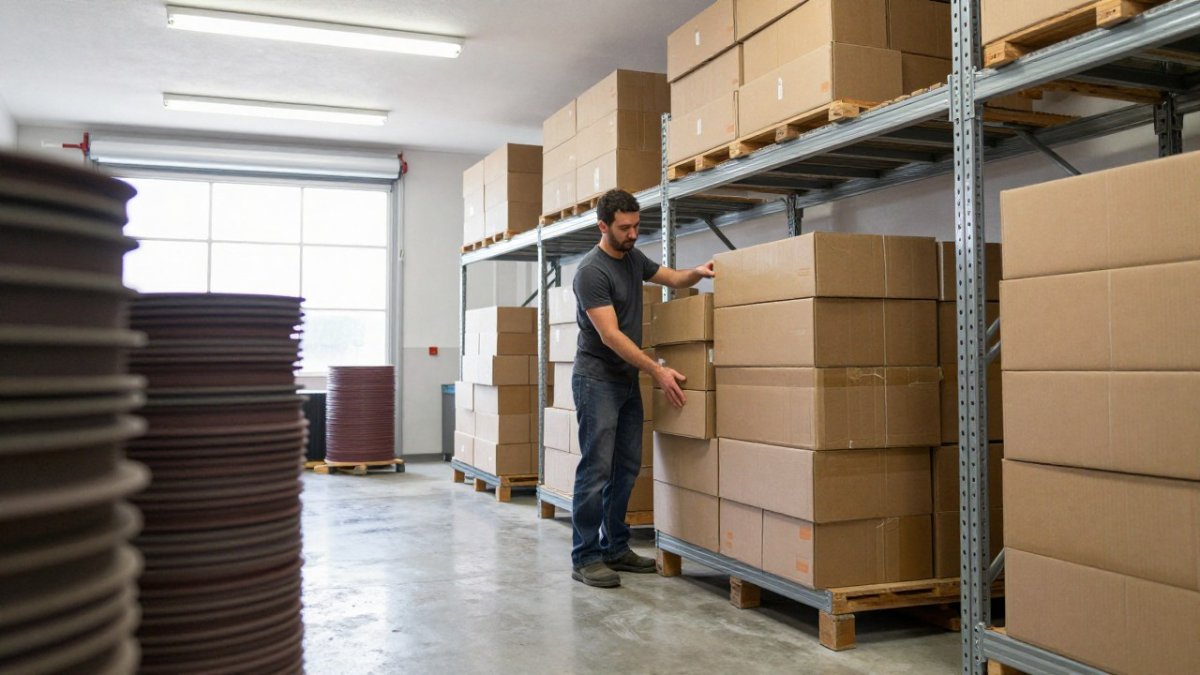
- Shelving or racking that keeps stock off the floor
- Opaque packaging or closed containers for every open item
- Space between stacks so air can move
- A clear label on every box, bag, and drum
Keep the area away from loading docks, wet processes, and anywhere water pools. Canadian Centre for Occupational Health and Safety guidance on workplace conditions is a useful reference for general workplace housekeeping standards.
Watch out: storing abrasives near a bay door that opens in winter invites condensation every time warm air meets cold stock.
Step 2: Control Temperature, Humidity, and Condensation
Abrasive storage fails most often at the point where temperature swings. Warm, humid air meeting a cold grinding wheel leaves condensation on the surface. The wheel looks fine. The bond has already started to take on moisture.
Storage guidance varies by product. Check the specific product data sheet for the temperature and humidity range it recommends, since resin-bonded wheels, coated belts, and blast media each tolerate conditions differently.
What to monitor and how:
- Mount a calibrated thermo-hygrometer in the stockroom, not on an exterior wall, and log readings at the same time each day
- Record daily high and low temperatures so you can see cycling, not just the moment you happen to check
- Watch dew point, not just humidity, condensation forms when a cold surface drops below the dew point of the surrounding air
- Keep a simple log sheet or sensor app so trends are visible over weeks, not guessed at
When to act, not just observe:
- If relative humidity climbs above your target band for more than a day, run dehumidification or ventilation before opening sealed packaging
- If daily temperature swings exceed roughly 5 °C, relocate stock to a more stable interior zone or insulate the room
- If a cold delivery arrives, let sealed packaging reach room temperature before opening, opening a cold drum in warm air pulls moisture straight onto the contents
- If you see condensation on racks, walls, or packaging, treat it as a failure and correct the source before restocking
Temperature cycling is the quiet killer. A pallet that moves from a cold truck to a warm dock to a cold rack goes through several condensation cycles in a day.
Step 3: Get Materials Off Concrete Floors and Onto Proper Supports
Concrete floors pull moisture. A bulk bag, sack, or drum sitting directly on the slab wicks dampness upward through the packaging. Raise everything onto pallets, racks, or shelving, and leave a gap under the lowest shelf so air can pass.
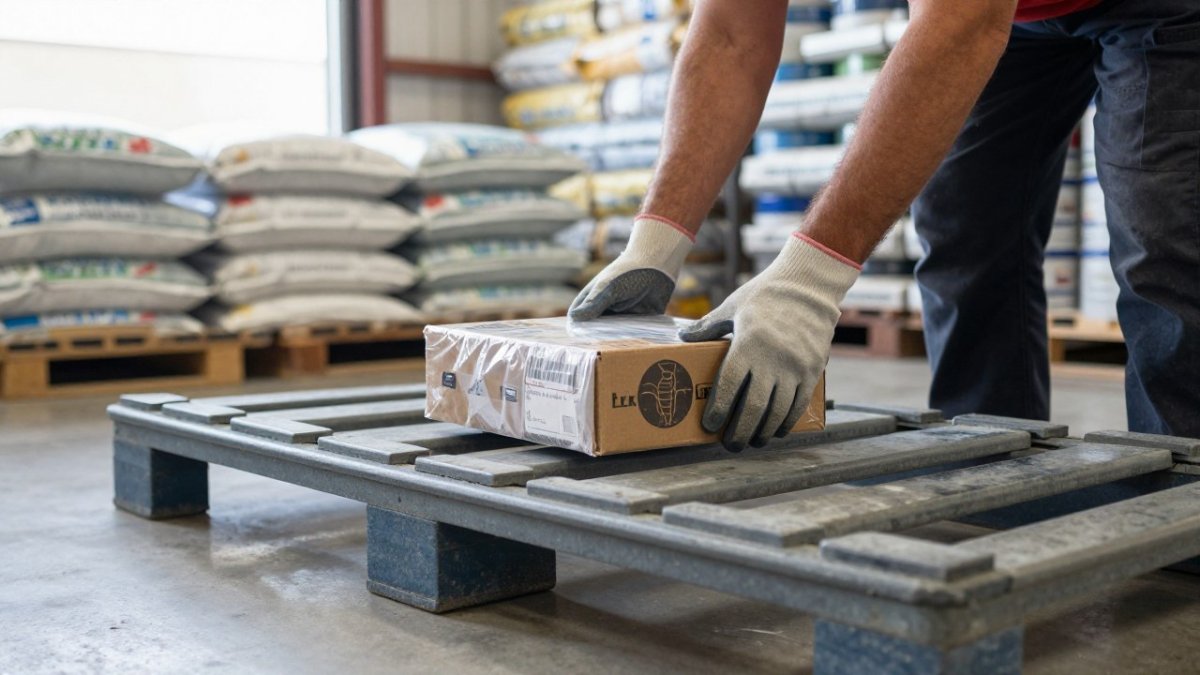
Use suitable supports and separators so heavy drums do not rest against lighter cartons. Because preventing impact damage starts with keeping heavy loads and fragile wheels properly separated, Flint Hills Barns can help frame the broader question of how a storage shelter supports safe handling.
Follow these handling rules:
- Never roll or drop a drum of blast media off a tailgate
- Stack cartons square, with the heaviest at the bottom
- Keep a clear aisle so forklifts and carts do not clip racking
- Use separators between layers of bonded abrasives
- Inspect for crushing or tears before putting stock away
A common mistake is treating a pallet as a permanent floor. Pallets absorb spills and hold dampness against the carton. Rotate pallets and replace any that stay wet.
Grinding Wheel Storage and Handling: Protect Edges and Bonds
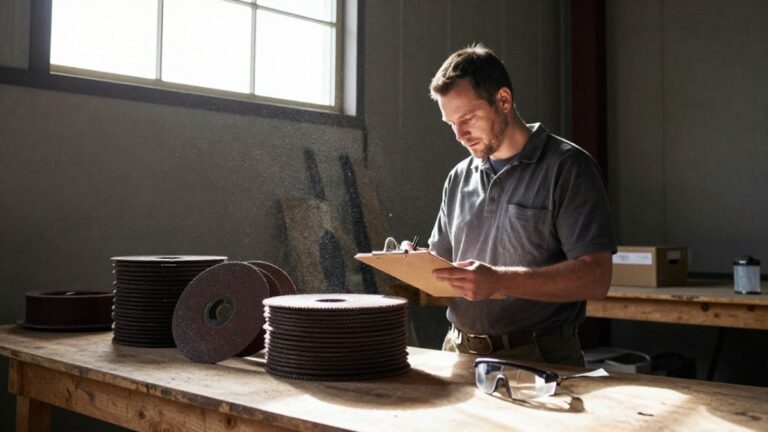
Grinding wheel storage and handling comes down to two rules: protect the edge, protect the bond. Bonded abrasives are brittle. A wheel that takes a knock can crack invisibly and fail under load.
Store wheels flat on a rigid shelf, or on edge in a proper rack if the manufacturer specifies it. Never lean a large wheel against a wall where it can slide. Keep them in original packaging until use, and never stack heavy items on top.
For daily handling:
- Carry wheels with both hands, never by the arbor hole
- Set them down gently, never drop them onto a bench
- Keep them away from oil, water, and solvent drips
- Rotate stock so older wheels go out first
CSA Group standards for abrasive products covers safety requirements worth checking against your own handling rules. If you are building out a shop floor, our guide to industrial grinding tools for body shops covers what to buy and how to protect it.
Blast Media Storage: Keep Media Clean, Dry, and Contamination-Free
Blast media storage protects one thing above all: cleanliness. Metallic media and organic media both lose performance when they pick up moisture, oil, or grit from the floor. Contaminated media clogs feeders and dulls the cut.
Keep media in sealed bulk bags, sacks, or drums until the moment it enters the hopper. Store drums on raised racking, never on bare concrete. Cover open hoppers between shifts.
Watch out: a drum left open near a wash station can pull in moisture and oil mist, which may cause the media to clump.
Label each container with the media type and date received.
Abrasive Labeling and Inventory Management That Prevents Waste
Abrasive labeling and inventory management is how a stockroom stays usable. Every box, bag, and drum needs a label that says what it is, the grit or grade, and the date it arrived. Without that, older stock hides behind newer stock and expires in place.
Set up a simple rotation system:
- Label with type, grit, and received date on arrival
- Place new stock behind old stock on the shelf
- Pull from the front, always
- Do a monthly walk-through and flag slow movers
- Keep a min/max level for your fastest-moving items
For a deeper look at keeping counts accurate, our article on managing industrial abrasive inventory walks through the full process. Good labeling also makes periodic inspection faster, you can spot a damaged or damp carton at a glance.
Abrasive Shelf Life and Expiration: What Actually Degrades
Abrasive shelf life depends on the material and how it is stored. Bonded abrasives and coated belts do not carry a hard expiry date, but they can degrade in storage. Moisture softens bonds, UV light breaks down backing and resin, and impact damage weakens the structure.
What actually degrades, and how fast:
- Resin bonds absorb moisture and lose strength, especially through repeated condensation cycles
- Backing paper and cloth curl, stiffen, or rot in damp air, and curled belts track poorly and shed grain
- Adhesive on hook-and-loop discs dries out and loses grip over months in dry heat
- Blast media cakes and bridges when damp, and metallic media can corrode if it picks up moisture
- UV exposure embrittles resin and backing, which is why opaque packaging matters
Rotation and lot tracking that actually works:
- Label every box, bag, and drum on arrival with product type, grit or grade, lot number, and received date
- Place new stock behind old stock and pull from the front, first in, first out
- Keep a min/max level for fast movers so rotation keeps happening instead of stock sitting
- Do a monthly walk-through and flag anything approaching a year in storage for inspection
- Record lot numbers so a problem batch can be traced and pulled if a complaint surfaces
A decision process for questionable stock:
- Inspect the packaging first, tears, water stains, or crushed corners mean the contents need a closer look
- Open and check the material, clumped or bridged blast media, stiff or curled belts, discolored or chipped wheels, or loose hook-and-loop adhesive are all red flags
- Quarantine anything suspect in a labeled hold area rather than returning it to the shelf
- Test a sample where it is safe to do so, or reject the lot if the defect is structural, a cracked wheel is never worth the risk
- Document the decision so purchasing knows not to reorder from a suspect batch
Health Canada’s guidance on workplace chemical and material safety is a helpful reference for general material handling. Rotate stock so nothing sits for years, and inspect older cartons before use. If a belt feels stiff or a wheel looks discolored, do not put it on the machine.
Different abrasive materials degrade in different ways, and knowing what fails helps you inspect older stock before it reaches the machine.
| Material or component | What degrades it | What happens |
|---|---|---|
| Resin bonds | Moisture and repeated condensation cycles | Absorb moisture and lose strength |
| Backing paper and cloth | Damp air | Curl, stiffen, or rot; belts track poorly and shed grain |
| Hook-and-loop disc adhesive | Dry heat over months | Dries out and loses grip |
| Blast media | Damp conditions | Cakes and bridges |
| Metallic media | Picking up moisture | Can corrode |
| Resin and backing | UV exposure | Embrittles resin and backing |
Request a Quote and Build a Storage Plan That Keeps Stock Ready
A storage plan only works if the stock keeps arriving in good condition and in the right amounts. That is where procurement and storage meet. Ordering in sensible quantities, on a schedule, keeps your rotation moving and stops old stock from piling up.
At IBEX Enterprises, our platform supports recurring subscription shipments, purchase order payments, rapid reordering from a personalized dashboard, and authorized supply of major brands like Sia, Festool, and Dynabrade.
If you need belts in a specific size and grit, you can request a quote from IBEX Enterprises. For shops planning supply around a new storage setup, our overview of reliable industrial abrasive supply chain solutions shows how consistent stock flow protects your rotation.
The real challenge is not building shelves. It is keeping a steady, dry, well-labeled supply flowing so your team never reaches for a compromised belt or wheel.
Frequently Asked Questions
How should industrial abrasives be stored?
Keep abrasives in a dry, cool, ventilated stockroom, not outdoors. Store boxes and bulk bags on pallets or raised racking rather than concrete floors, keep packaging sealed, and keep materials out of direct sunlight. Separate grinding wheels by type and support them so edges are not bearing weight. Label each package with receipt date and rotate stock oldest-first. These abrasive storage basics protect both performance and safety.
Why do abrasives need to be kept dry?
Moisture weakens the bond that holds abrasive grain to the backing or wheel. Paper and cloth backings can swell, cockle, or lose strength, and bonded wheels exposed to damp conditions can degrade internally in ways you cannot see. Condensation from temperature swings is a common culprit, so avoid moving cold packages into warm, humid rooms without letting them acclimatize. A dry area with controlled humidity prevents most moisture damage.
How should grinding wheel storage and handling be managed safely?
Store grinding wheels on edge on suitable supports or racks, never flat or stacked under heavy loads. Keep them away from impact damage, dropping, and bumping, and do not roll them along the floor. Protect them from moisture, extreme temperature changes, and direct sunlight. Before mounting, inspect each wheel for cracks or damage and check that it is within its expiration date. Damaged wheels should never be used.
Can abrasive discs or belts expire?
Yes. Abrasive shelf life varies by product: resin-bonded discs and belts, paper-backed sheets, and some blast media degrade over time, especially with moisture exposure. Use older stock first through a labeled first-in, first-out system, and check packaging and material condition periodically. If a product looks discolored, feels damp, or the backing has lost flexibility, treat it as suspect and inspect before use rather than assuming it is still good.