Last Updated: October 28, 2026
Quick Summary
Buying Festool abrasive discs online means matching diameter, hole pattern, and grit to your sander before ordering, then setting reorder triggers instead of a calendar schedule. Measure the backing pad rather than an old disc, and count the dust-extraction holes so the disc lines up with the pad.
- Coarse discs run roughly P40 to P80, medium P100 to P150, and fine P180 and up.
- Festool labels its discs in FEPA P-grades, which don’t match older CAMI numbers exactly.
- Measure the backing pad, not an old disc, since pads wear and compress.
- 225 mm and 8-7/8 inches describe the same disc, so don’t order twice.
- Set a reorder trigger based on remaining packs rather than a monthly schedule.
Table of Contents
- Why Purchasing Festool Abrasive Discs Online Beats the Counter Run
- Your Festool Sanding Disc Grit Guide: Match the Grit to the Job
- Festool Orbital Sander Disc Sizes: Measure Before You Order
- Festool Granat Sanding Discs: The All-Round Workhorse
- Festool Platin Abrasive Discs: For Primer and Finish Sanding
- How to Buy Festool Abrasive Discs Online Without Overordering
- Request a Quote and Set Up Your First Recurring Order
- Frequently Asked Questions
Why Purchasing Festool Abrasive Discs Online Beats the Counter Run
Buying Festool abrasive discs online can remove the need for a trip to a counter. At IBEX Enterprises, we supply professional-grade abrasives to woodworking, metal fabrication, and autobody operations.
Here’s the argument in one line: a sander sitting idle while someone drives across town is the most expensive abrasive you’ll ever buy.
Festool abrasive discs are identified by diameter, hole pattern, and grit. Check those details when selecting discs for your sander.
We’ll cover the seven things that trip people up most often: grit selection, disc sizing, the difference between Granat and Platin, and how to order without burying your shop in surplus stock.
Your Festool Sanding Disc Grit Guide: Match the Grit to the Job
The right grit is the coarsest one that removes the defect without leaving scratches deeper than the next step can clear. That’s the whole principle. Everything else is detail.
Coarse, Medium, and Fine: What Each Grit Range Does
Coarse discs, roughly P40 to P80, strip material, level uneven joints, and remove old finish. Medium grits, around P100 to P150, erase the scratch pattern from the coarse pass and prepare the surface for finish. Fine grits, P180 and up, sit between coats and refine the final surface before topcoat.
The mistake we see most often is jumping from a coarse disc straight to a fine one. Every scratch from the coarse pass has to be removed by the next grit in sequence, and skipping steps means those scratches show up under finish, not before it. A proper progression is boring and fast. A shortcut is dramatic and slow.
Two grit scales exist side by side. CAMI and FEPA P-grade numbers don’t line up exactly, so a P120 is not identical to a 120 in the older CAMI system. Festool labels its discs in P-grades, which is the standard for most European abrasives. If you’re coming from a different brand’s numbering, check the scale before you assume the grit matches.
For a full grit-by-grit breakdown with progressions for wood, metal, autobody, and drywall, our guide to how to choose the right sanding grit covers the ranges from 40 through 1500 and explains where the two grading systems diverge.
Festool Orbital Sander Disc Sizes: Measure Before You Order
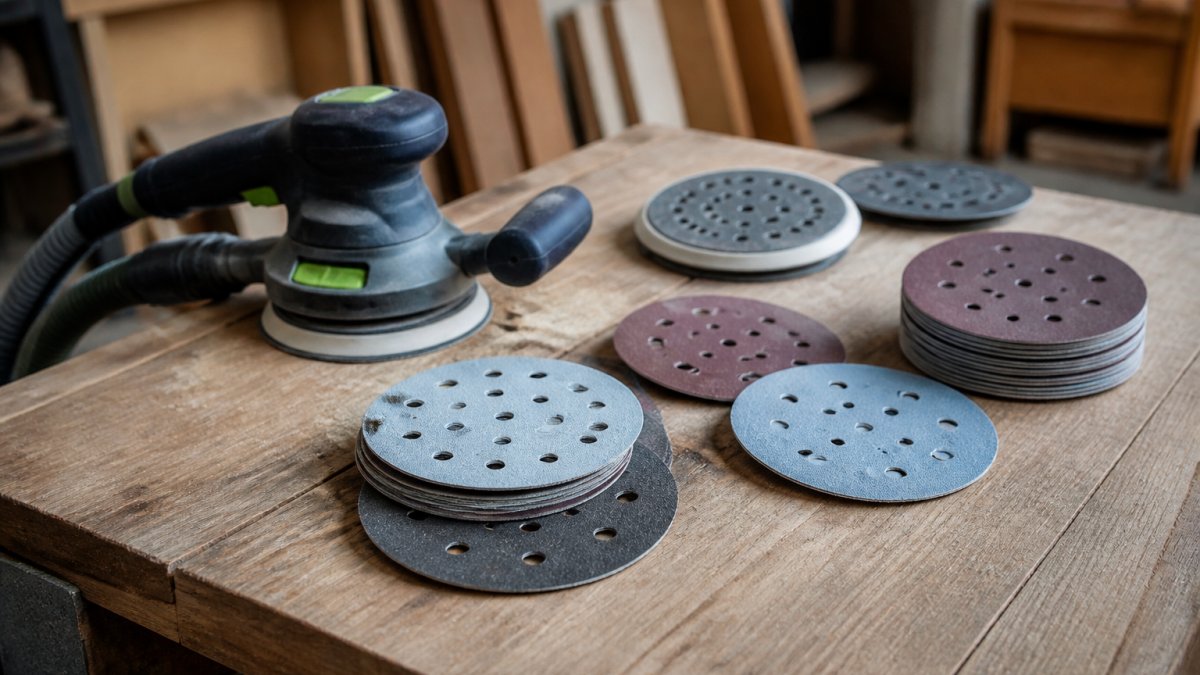
Disc diameter and hole pattern decide whether a disc fits your sander, and neither is worth guessing. Festool sanders use specific combinations of diameter and dust-extraction hole count, and a disc with the wrong hole pattern will clog and load instead of clearing dust.
Measure the backing pad, not an old disc. Pads wear and compress, and a disc that has been stored in a hot shop can relax slightly. The pad diameter is the number that matters.
Then count the holes. Dust extraction only works when the holes in the disc line up with the holes in the pad. A disc with the wrong hole count blocks airflow, and the abrasive loads up within minutes.
The two sizes you’ll encounter most in professional shops are the 5-inch and 6-inch hook-and-loop discs, plus the larger 225 mm discs used on Festool’s bigger sanders. Note that 225 mm and 8-7/8 inches describe the same disc, so don’t let the unit switch confuse you into ordering twice.
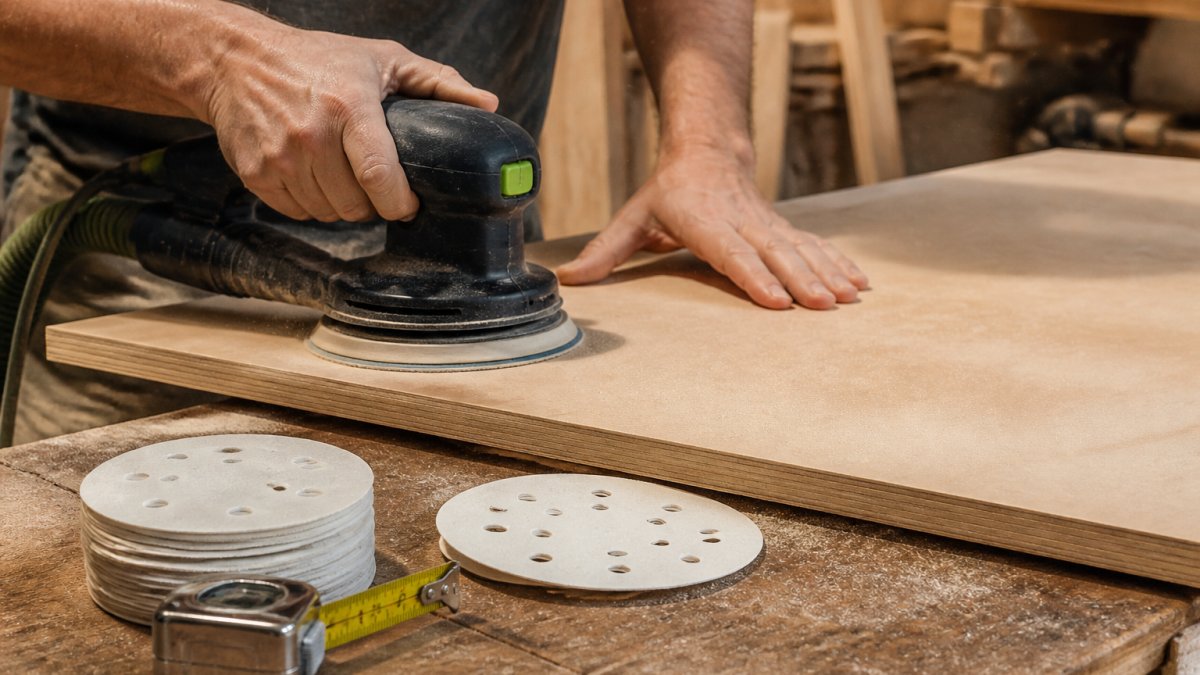
Before you commit to a pack size, it’s worth browsing the actual sanding discs category to confirm which diameters and patterns are stocked, because a great grit range in the wrong size helps nobody.
Festool Granat Sanding Discs: The All-Round Workhorse
If you’re ready to stock the 225 mm format, you can shop the 225 mm hook and loop discs in the grits covered above.
Festool Platin Abrasive Discs: For Primer and Finish Sanding
For shops running 5-inch sanders, the 5-inch hook and loop sanding discs range includes Festool-compatible patterns alongside other professional lines, so you can match the disc to the pad you already own.
How to Buy Festool Abrasive Discs Online Without Overordering
To plan stock, separate frequently used grits from occasional grits and consider usage when deciding stock depth.
Start with a usage audit before your first order. Pull your last few months of abrasive purchases and sort them by grit and size.
| Grit band | Typical use | Stocking approach |
|---|---|---|
| Coarse (P40-P80) | Stripping, leveling, defect removal | Modest depth, reorder on trigger |
| Medium (P100-P150) | Scratch removal, surface prep | Deepest stock, highest turnover |
| Fine (P180+) | Between coats, final refinement | Moderate depth, size-specific |
| Specialty (Platin, etc.) | Primer and finish passes | Small quantity, job-driven |
Then set a reorder trigger rather than a calendar date. A trigger based on remaining packs is more reliable than a monthly schedule, because it responds to actual consumption instead of a guess.
Request a Quote and Set Up Your First Recurring Order
Recurring shipments are a feature of our platform for purchasing professionals.
- Audit your last few months of abrasive usage by grit and size
- Confirm pad diameter and hole pattern on every sander in the shop
- Separate high-turnover grits from job-specific ones
- Set reorder triggers on the high-turnover items
- Route the predictable items into a recurring shipment
- Keep purchase order payment set up so accounting isn’t chasing invoices
If you’re evaluating a switch from an existing supplier, the fair question is what changes for your team. Ours is a B2B-first platform: recurring shipment subscriptions, purchase order payment support, and rapid reordering from a personalized dashboard.
When you’re ready, buy professional sanding supplies online and request a quote to set up your first recurring order.
Frequently Asked Questions
Where can I buy Festool abrasive discs online?
IBEX Enterprises is an authorized Canadian supplier for Festool, Sia, and Dynabrade, and supports purchase order payments, recurring shipment subscriptions, and dashboard reordering. Contact IBEX Enterprises for information about current product availability and pricing.
What is the difference between Festool Granat and Platin abrasives?
Granat is a general-purpose abrasive suited to bare wood, paint removal, and most sanding tasks across a range of materials. Platin is built for finer work, particularly sanding primer and preparing surfaces before a topcoat. Many shops keep both on hand: Granat for stock removal and shaping, Platin for the finishing stages. If your work is mostly cabinet and millwork production, Granat will cover most of your usage, with Platin reserved for finish prep.
How do I choose the right grit for Festool sanding discs?
Work from coarse to fine and stop when the surface is ready for the next step. Lower grit numbers remove material faster, while higher numbers refine the surface. Skipping grits can leave scratches that show up under finish. A practical approach is to note which grits your shop uses most. Choose a grit guide that reflects the materials you sand.
How many sanding discs should a cabinet shop keep in stock?
There is no single number, because it depends on your sanding hours, the grits you use most, and how often you change discs. You can track consumption to help inform your stock decisions.
The challenge most shops face isn’t finding Festool abrasive discs, it’s keeping the right grits in the right sizes on the shelf without anyone spending an afternoon on it. IBEX Enterprises handles that side of the business with automated recurring shipments, purchase order payment support, and a dashboard built for fast reordering. Get started with IBEX Enterprises and keep your sanders running instead of waiting on a supply run.