Last Updated: November 10, 2026
Quick Summary
Choosing professional-grade grinding tools starts with the job, not the tool: match the machine and abrasive to material removal, surface finish, or cut-off work. Then confirm the wheel suits the material and that its marked maximum RPM meets or exceeds the grinder’s no-load speed.
- Hard steels need a softer wheel grade; soft metals like aluminum need a coarse, open wheel.
- Flap discs run cooler and leave a better finish than a grinding wheel.
- Disc diameter drives power needs, weight, and the abrasives a grinder accepts.
- The accessory’s marked maximum RPM must meet or exceed the grinder’s no-load RPM.
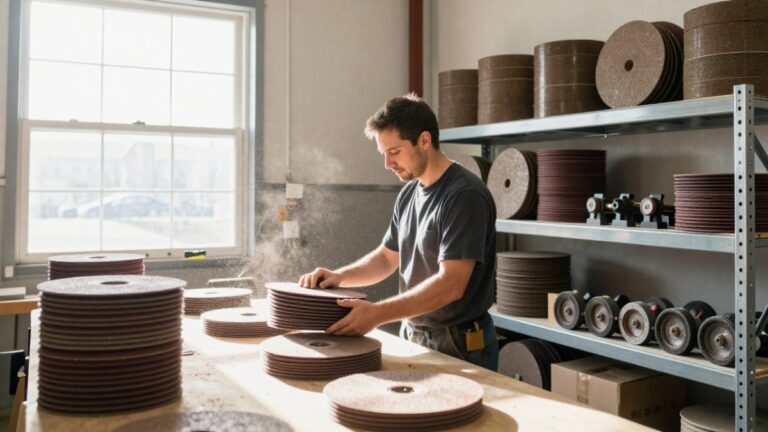
- Store discs flat, dry, and off concrete floors to keep the bond sound.
Table of Contents
- Start With the Job: Matching Grinding Tools to the Work
- How to Choose a Grinding Wheel by Material and Task
- Grinding Disc Types and Uses: A Practical Breakdown
- Angle Grinder Buying Guide: Power, Speed, and Size
- Safety Ratings, Guards, and Accessory Compatibility
- Grinding Tool Maintenance and Storage That Extend Service Life
- Total Cost of Ownership and Buying for Daily Use
- Request a Quote and Build Your Grinding Kit
- Frequently Asked Questions
Start With the Job: Matching Grinding Tools to the Work
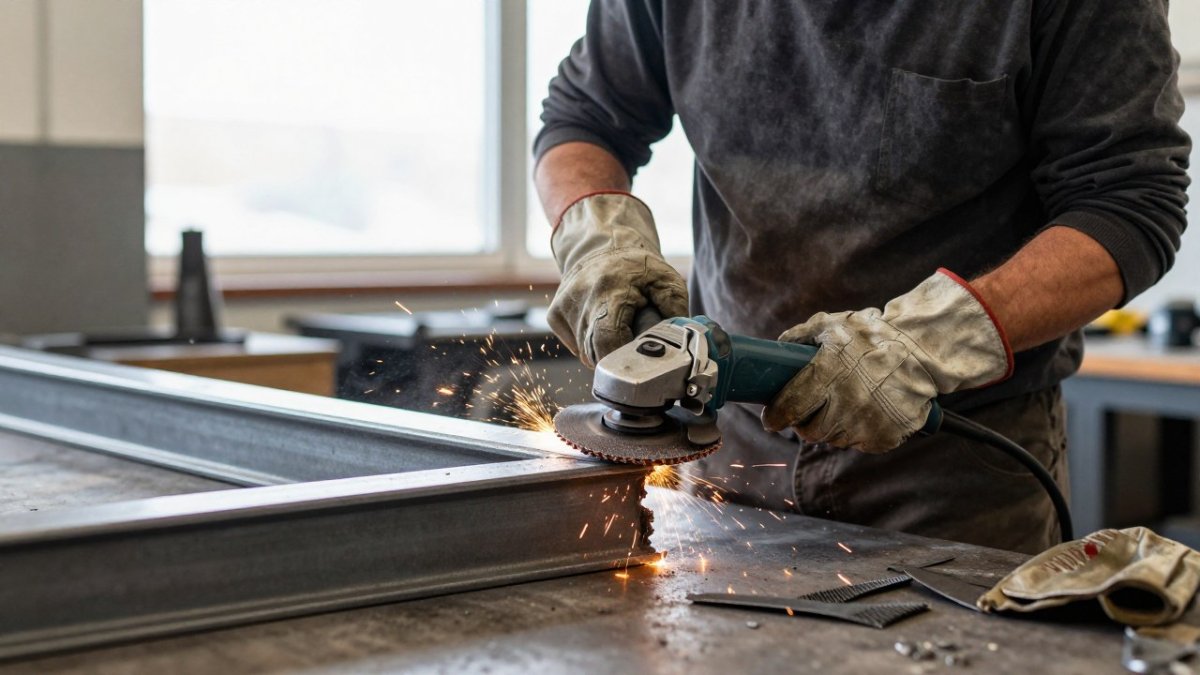
Choosing professional-grade grinding tools starts with the job, not the tool. A metal fabricator removing a heavy weld needs a different machine and disc than a cabinet shop blending a finish.
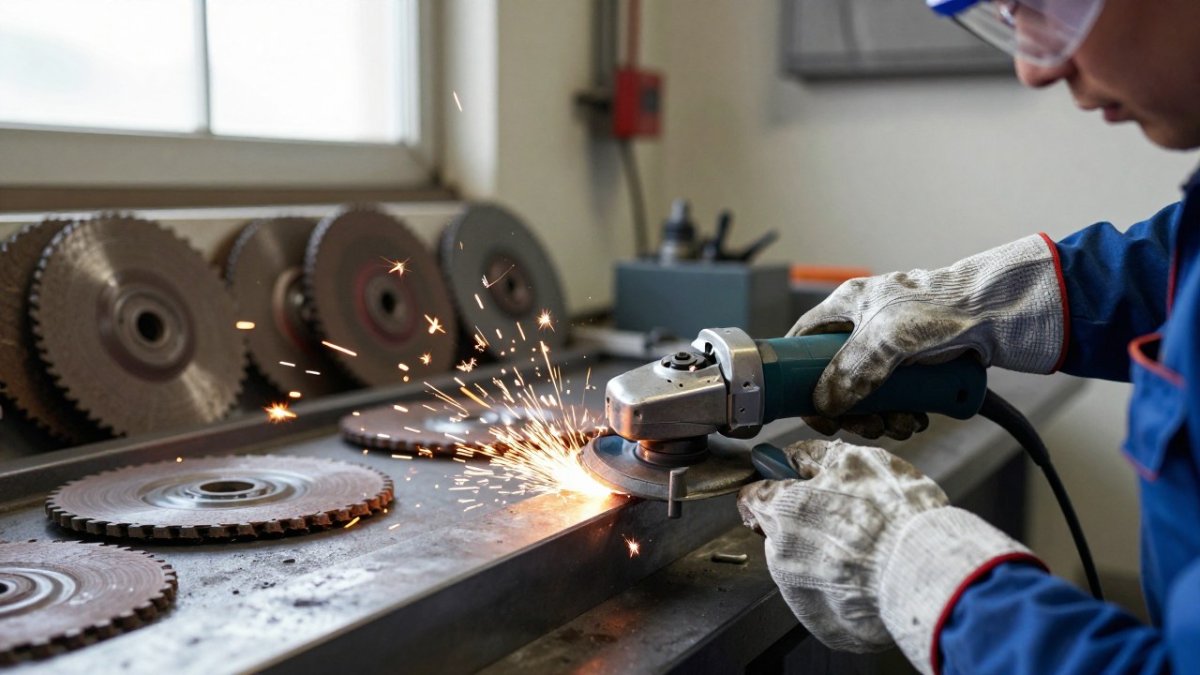
Three job types cover most shop work:
- Material removal: heavy stock removal, weld leveling, rust and scale
- Surface finish: blending, deburring, paint prep, polishing
- Cut-off work: slicing bar stock, pipe, and sheet
Each task sets the tool size, motor power, and abrasive. Get the match right and the work goes faster with less rework. Get it wrong and you burn through discs and hours.
Material Removal, Surface Finish, and Cut-Off Work
Material removal wants torque and a coarse abrasive. Surface finish wants control and a finer grit. Cut-off work wants a thin wheel and high RPM.
A common mistake is using one grinder for all three tasks, which can mean slow stock removal and a rough finish. Match the machine to the dominant task, then add a second tool for the rest.
For body-shop work specifically, our industrial grinding tools for body shops guide applies this same selection logic to a concrete trade.
How to Choose a Grinding Wheel by Material and Task
How to choose a grinding wheel comes down to three things: material, task, and the wheel’s grade, bond, and grain. The wheel must suit the metal, not the other way around. A wheel that is too hard for the workpiece glazes and stops cutting; a wheel that is too soft wears away before it does useful work.
Start with the material, then narrow by task, then confirm the wheel’s marked maximum speed against the tool. That order prevents most mismatches before you mount a wheel.
Matching Wheel to Material
Hard steels need a softer wheel grade so worn grains release and fresh abrasive stays exposed. Soft metals like aluminum need a coarse, open wheel that resists loading. Stainless demands a wheel free of iron, sulfur, and chlorine to avoid contamination.
A practical way to think about it:
- Carbon and alloy steel: aluminum oxide in a vitrified or resin bond, medium grade. Use a coarser grit for stock removal and a finer grit for finishing.
- Hardened and tool steel: ceramic or premium aluminum oxide grain in a softer grade so the wheel keeps cutting instead of glazing.
- Stainless steel: iron-, sulfur-, and chlorine-free wheel, often a resin bond, to prevent contamination and corrosion of the work surface.
- Aluminum and other non-ferrous metals: coarse, open-coat wheel that sheds chips instead of loading. A wheel designed for steel will load and overheat on aluminum.
- Concrete and masonry: silicon carbide grain in a wheel rated for the material, run dry or wet per the manufacturer’s direction.
Reading Wheel Grade, Bond, and Grain
Wheel grade is the strength holding abrasive grain in place. Soft grades release grain faster; hard grades hold it longer.
Bond is the material that glues the grain together. Vitrified bonds suit precision work and hold form well; resin bonds handle high speed and shock and are common on cut-off and grinding discs.
Abrasive grain is the cutting mineral. Ceramic grains cut cooler and last longer on hard metals. Aluminum oxide is the general-purpose workhorse. Zirconia alumina sits between the two for heavy stock removal on steel.
Matching Wheel to Task
Task sets grit and wheel shape more than material does. For heavy stock removal, use a coarse grit and a wheel that clears swarf.
Watch out: a wheel marked for a higher maximum speed than the tool can deliver is safe, but a wheel rated below the tool’s no-load RPM is not.
When you’re ready to stock up, you can browse flap discs and flap wheels or see surface conditioning and strip discs that match the cleaning and blending work above.
Grinding Disc Types and Uses: A Practical Breakdown
Grinding disc types and uses split into four families, and each covers a distinct job. Picking the right family is half the battle.
| Disc type | Best for | Typical use |
|---|---|---|
| Flap disc | Blending, weld cleanup, finish | One-step grind and finish |
| Grinding wheel | Heavy stock removal | Weld leveling, deburring |
| Cut-off wheel | Slicing metal | Pipe, bar, sheet |
| Surface conditioning disc | Cleaning, paint and rust removal | Prep before coating |
Flap discs run cooler and leave a better finish than a grinding wheel. Cut-off wheels are thin and fast but never for side grinding. Surface conditioning discs clean and blend without gouging the base metal.
When you’re ready to stock up, you can browse flap discs and flap wheels or see surface conditioning and strip discs that match the cleaning and blending work above.
Angle Grinder Buying Guide: Power, Speed, and Size
An angle grinder buying guide should start with disc diameter, because size sets everything else. Disc diameter drives the tool’s power needs, weight, and the abrasives it accepts.
Common sizes and their roles:
- 100 mm and 115 mm: light work, tight spaces, one-hand control
- 125 mm: the all-round shop size
- 180 mm and 230 mm: heavy stock removal and deep cuts
Motor power, measured in wattage, must match the disc size and workload. Rotational speed, measured in RPM, must never exceed the disc’s rated maximum.
Corded vs. Cordless and What Duty Cycle Really Means
Corded grinders deliver constant power for long sessions. Cordless units trade runtime for freedom, and battery voltage hints at capability, not endurance.
Duty cycle is the share of time a tool can run before it needs to cool. A light-duty grinder overheats under sustained daily use. Heavy-duty models with metal gears and better cooling handle continuous work.
If you’re pairing grinders with finishing tools, compare random orbital, air and electric sanders to build a complete setup.
Safety Ratings, Guards, and Accessory Compatibility
Safety comes down to three checks: the guard is on, the accessory is rated for the tool’s RPM, and the operator is protected. Skip any one and the risk climbs fast. The unique angle here is verification: most shop injuries trace back to an accessory that was never checked against the tool, not to a missing rule.
Verifying Maximum RPM and Speed Ratings
Every bonded wheel and coated disc carries a marked maximum operating speed, usually on the blotter or the disc backing. Compare that number to the grinder’s no-load RPM on its nameplate. The accessory rating must meet or exceed the tool speed. A wheel rated below the tool’s speed can burst under centrifugal load.
- Check the wheel blotter for maximum RPM before mounting.
- Check the grinder nameplate for no-load RPM, not just wattage.
- Never run a disc above its marked maximum speed, even briefly.
- Retire any wheel that has been dropped, chipped, or exposed to moisture, because the bond may be compromised even if the wheel looks intact.
Guard and Accessory Compatibility
A guard must cover the exposed wheel and stay adjusted as the disc wears. Match the accessory’s arbor size to the spindle, and check the flange and nut for wear. Guard design differs by accessory type: a cut-off wheel needs a guard that clears the wheel diameter, while a grinding wheel needs full coverage of the exposed face. Using a guard meant for one accessory family with another is a common shop shortcut that removes the protection the guard was designed to provide.
- Confirm the guard is rated for the disc diameter you are mounting.
- Match arbor size and flange type to the spindle.
- Inspect flanges and nuts for wear or galling before each mount.
- Keep the guard adjusted as the wheel wears down.
Personal Protective Equipment
Personal protective equipment is not optional:
- Safety glasses rated to CSA Z94.3
- Face shield for cut-off and heavy work
- Hearing protection and gloves
Shop safety glasses that meet the CSA Z94.3 rating this section covers. For official guidance on abrasive wheel safety, see the Canadian Centre for Occupational Health and Safety and its material on wheel guards and speed ratings.
Watch out: a face shield does not replace safety glasses. Use both for cut-off and overhead work, because debris can reach the eyes from below the shield.
Grinding Tool Maintenance and Storage That Extend Service Life
Grinding tool maintenance and storage protect both the machine and the abrasive. A few habits add months to service life.
- Blow dust from vents after each session
- Check cords and guards for damage
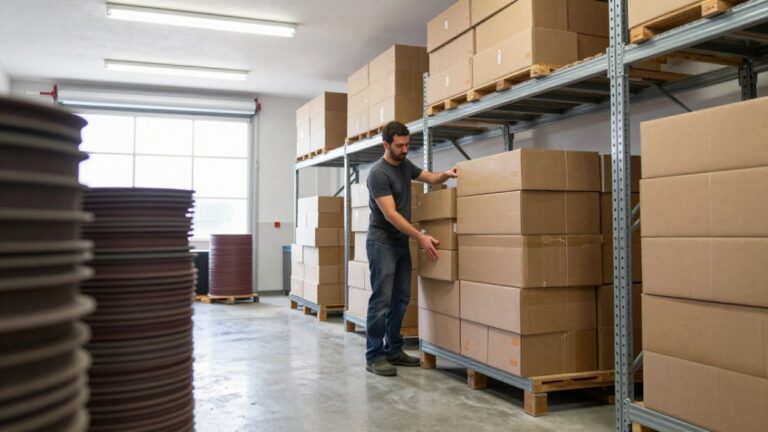
- Store discs flat, dry, and off concrete floors
- Never use a disc past its expiry or after a drop
Dust is the quiet killer. Clogged vents overheat the motor and shorten tool durability. Store abrasives away from moisture so the bond stays sound.
Total Cost of Ownership and Buying for Daily Use
Total cost of ownership beats sticker price every time. The cheapest grinder often costs the most once you count discs, downtime, and replacement.
Weigh these factors:
- Abrasive consumption per job
- Motor life under daily load
- Downtime when a tool fails
- Reorder time and stockouts
For sustained daily use, buy heavy-duty tools with metal gears and a duty cycle that matches your shift. Fewer failures and less rework outweigh a higher upfront cost. For background on abrasive product standards, the Canadian Standards Association publishes relevant references.
Request a Quote and Build Your Grinding Kit
Building the right grinding kit means matching each tool to its job, then keeping the consumables stocked. That is where a reliable supply partner earns its place.
IBEX Enterprises supplies professional-grade abrasives, tools, and protective gear for shops of various sizes.
Get started with IBEX Enterprises and request a quote to build a grinding kit for your shop.
Ready to equip your shop with the right grinding tools and abrasives? Request a quote and let our team match the kit to your work.
Frequently Asked Questions
How do I choose the right grinding tool for a job?
Start with the material and the task, not the brand. For heavy stock removal on steel, a corded angle grinder with a depressed-center wheel in the 115 mm to 125 mm range covers most shop work. For finishing and blending, a smaller tool with a flap disc gives more control. Match the disc’s maximum RPM rating to the tool’s no-load speed, confirm the guard fits, and pick a motor wattage that suits how many hours a day the tool runs.
What is the difference between a grinding wheel and a cutting wheel?
A grinding wheel is built for material removal and is used at a shallow angle to the work, so it is thicker and designed to withstand side load. A cutting wheel is thin, typically 1 mm to 3 mm, and is used at 90 degrees to slice through metal with minimal kerf. Never use a cutting wheel for grinding or a grinding wheel for cut-off work: the side load on a thin disc can cause it to shatter. Check the disc’s speed rating against your grinder before mounting.
What should I look for in a professional-grade angle grinder?
Look at motor wattage, no-load RPM, switch type, and gear material. A 900 W to 1,200 W motor handles most fabrication and body shop work; sustained industrial use pushes toward 1,400 W and above. Slide switches suit long runs, paddle switches suit quick, controlled passes. Metal gears and a serviceable brush design extend tool life. Confirm the spindle thread and guard size match the discs you already stock so you are not buying a second accessory system.
How can I tell when a grinding wheel needs to be replaced?
Replace a wheel when the abrasive grain is glazed and the wheel stops cutting, when the diameter has worn down noticeably, or after any drop, crack, or chip. A ring test before mounting helps: tap a clean wheel lightly and listen for a clear ring, and discard it if the sound is dull. Store wheels flat on a rack away from moisture and impact, and never exceed the maximum RPM printed on the blotter.